This is the fifth updated edition of Morgan's study and analysis of urban management in America. First issued in 1980, many of the same problems are found to be facing public officials today - fiscal stress, doing more with less, productivity enhancement, privatization, cutback management, retrenchment, and economic development are still very much ......
ISBN-13: 9781566430654
(Paperback)
Publisher: SAGE PUBLICATIONS Imprint: CHATHAM HOUSE PUBLISHERS INC.,U.S.
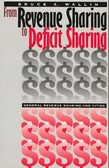
Once hailed as a revolutionary change in US federal aid policy that would return power to state and local governments, General Revenue Sharing was politically dead a decade later. This title offers the history of the General Revenue Sharing program - why it passed, why state and local governments used it the way they did, and why it died.
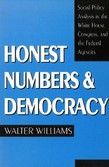
Social Policy Analysis in the White House, Congress, and the Federal Agencies
Drawing heavily on candid off-the-record interviews with political executives, career civil servants, elected officials and Washington-based journalists, the author documents the steady deformation of social policy analysis under the pressure of ideological politics waged by both the executive and legislative branches.
It is becoming more widely recognized that to move towards better dynamic representations of urban and regional processs, analytical frameworks are needed which simulate the characteristics and behaviour of individuals rather than of groups or aggregates of individuals. This volume reports progress with microsimulation, a methdology aimed at ......
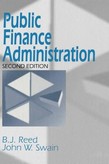
Reed and Swain provide a broad introduction to public finance administration then go on to cover in more detail topics such as revenue and expenditure, managing cas h flow, capital budgets and the financial components of huma n resource management. '
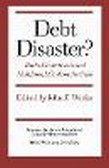
Banks, Government and Multilaterals Confront the Crisis
Suitable for the nontechnical reader and intended to intervene in the policy debate, this book offers informative analysis, controversial assessments, and concrete solutions to bring a close the bleakest period for the Third World since the end of World War II.
How to Use Qualitative Methods in Evaluation -- a new volume in the Program Evaluation Kit -- reflects the growing use of qualitative techniques in the evaluation process. The author differentiates the qualitative approach in method and philosophy from more traditional quantitative methods and specifies the kinds of evaluation question for which it is most appropriate. The design decisions and sampling strategies which underlie the method are explained. Patton also includes clearly illustrated step-by-step guides for planning and conducting fieldwork and observations, in-depth interviewing, and analysing, interpreting and reporting results.
This volume -- the revised edition of How to Measure Program Implementation -- covers the assessment of how a programme design works in practice. It reflects the recent emphasis on qualitative methods, and discusses when qualitative or quantitative methods are more appropriate. The book illustrates that the evaluator's task is not to judge the adequacy of programme implementation, but rather to document, describe, observe or assess by some other means how a programme is implemented. The text has been organized to reflect a natural and logical ordering of the steps of planning, data collection and analysis. References have been updated and examples included from education, business, social services, and other non-profit settings.