Founded in 1956, Penn State University Press publishes rigorously reviewed, high-quality works of scholarship and books of regional and contemporary interest, with a focus on the humanities and social sciences. The publishing arm of the Pennsylvania State University and a division of the Penn State University Libraries, the Press promotes the advance of scholarship by disseminating knowledge—new information, interpretations, methods of analysis—widely in books, journals, and digital publications.
Scholarly publishing has faced monumental challenges over the past few decades. The Press takes its place among those institutions moving the enterprise forward. Its innovative projects continue to identify and embrace the technological advances and business models that ensure scholarly publishing will remain feasible, and widely accessible, well into the future.
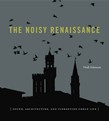
Analyzes how the premodern city, through the example of Renaissance Florence, can be understood as an acoustic phenomenon. Explores how city sounds, such as the ringing of church bells, can be foundational elements in the creation and maintenance of urban communities and the spaces they inhabit.
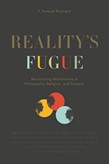
Reconciling Worldviews in Philosophy, Religion, and Science
Science, religion, philosophy: these three categories of thought have organized humankind’s search for meaning from time immemorial. Reality’s Fugue presents a compelling case that these ways of understanding, often seen as competing, are part of a larger puzzle that cannot be rendered by one account of reality ......
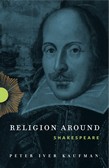
For years scholars and others have been trying to out Shakespeare as an ardent Calvinist, a crypto-Catholic, a Puritan-baiter, a secularist, or a devotee of some hybrid faith. In Religion Around Shakespeare, Peter Kaufman sets aside such speculation in favor of considering the historical and religious context surrounding his work. ......
In this third volume, Khrushchev discusses the search for allies in the Third World. This volume is devoted to international affairs and is the only complete and fully reliable English-language version of the memoirs of the Soviet leader Nikita Khrushchev.
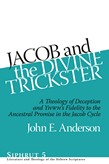
A Theology of Deception and YHWH's Fidelity to the Ancestral Promise in the Jacob Cycle
The book of Genesis portrays the character Jacob as a brazen trickster who deceives members of his own family: his father Isaac, brother Esau, and uncle Laban. At the same time, Genesis depicts Jacob as YHWH’s chosen, from whom the entire people Israel derive and for whom they are named. These two notices produce a latent tension in the ......
John Singer Sargent and the Queer Flora of Fin-de-Siecle Art
Explores the art of John Singer Sargent in the context of nineteenth-century botany, gynecology, literature, and visual culture. Argues that the artist was elaborating both a period poetics of homosexuality and a new sense of subjectivity, anticipating certain aspects of artistic modernism.
A Vision Showed to a Devout Woman and A Revelation of Love
Julian of Norwich (ca. 1343–ca. 1416), a contemporary of Geoffrey Chaucer, William Langland, and John Wyclif, is the earliest woman writer of English we know about. Although she described herself as “a simple creature unlettered,” Julian is now widely recognized as one of the great speculative theologians of the Middle Ages, ......
On May 4, 1380, Cecily Chaumpaigne filed a quitclaim with the Chancery in Westminster, releasing the poet Geoffrey Chaucer from any prosecution de raptu meo (on account of my rape). This legal document, lost for centuries, has haunted Chaucer studies since its rediscovery in 1873.
Over the past 150 years since it reemerged, ......