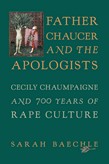
On May 4, 1380, Cecily Chaumpaigne filed a quitclaim with the Chancery in Westminster, releasing the poet Geoffrey Chaucer from any prosecution de raptu meo (on account of my rape). This legal document, lost for centuries, has haunted Chaucer studies since its rediscovery in 1873.
Over the past 150 years since it reemerged, many Chaucer scholars have sought to discount, sanitize, or excuse the release. Through a careful examination of the long Chaucer historiography, Sarah Baechle shows how critics have read the question of Chaucers potential culpability for rape through prevailing attitudes toward sexual violence. They did so, moreover, in ways that will be very familiar to contemporary readers versed in rape culture-practices that dismiss sexual violence by centering and promoting accused perpetrators, erasing or attacking the victim-survivor, and minimizing the violence of the crime. Baechle pairs the necessary excavation of this critical history with reparative readings of the poets narratives of sexual violence, including the Millers Tale, the Reeves Tale, the Wife of Baths Tale,and Troilus and Criseyde, and she theorizes "assailant speech" as a counterpart to survivor speech, proposing it as a new means of understanding Chaucers place in feminist studies of the Middle Ages.
Father Chaucer and the Apologists is an urgently needed examination of the discourse surrounding Chaumpaignes quitclaim that reveals the ties between Chaucer studies and the persistence of rape culture. This book will appeal to students and scholars of Chaucer and of gender and sexual violence more broadly.
Sarah Baechle is Assistant Professor of English at the University of Mississippi. She is the coeditor of Rape Culture and Female Resistance in Late Medieval Literature, also published by Penn State University Press.
"Sarah Baechle has produced a thought-provoking and thorough work that asks us to consider what literature does and can do, to question how we relate to the art we consume."
-Eleanor Janega Times Literary Supplement
"Deftly interweaving smart close readings of Chaucer biographies and criticism, coverage of historical rape cases, and Chaucers poetry, Father Chaucer and the Apologists illuminates the co-constitution of Chaucer studies and rape culture. By reckoning with this critical history and proposing new interpretive possibilities, Baechle offers a feminist revision of the field with space for rape survivors-and not merely men who identify with Chaucer-as critical readers of his work."
-Suzanne Edwards, author of The Afterlives of Rape in Medieval English Literature