Founded in 1956, Penn State University Press publishes rigorously reviewed, high-quality works of scholarship and books of regional and contemporary interest, with a focus on the humanities and social sciences. The publishing arm of the Pennsylvania State University and a division of the Penn State University Libraries, the Press promotes the advance of scholarship by disseminating knowledge—new information, interpretations, methods of analysis—widely in books, journals, and digital publications.
Scholarly publishing has faced monumental challenges over the past few decades. The Press takes its place among those institutions moving the enterprise forward. Its innovative projects continue to identify and embrace the technological advances and business models that ensure scholarly publishing will remain feasible, and widely accessible, well into the future.
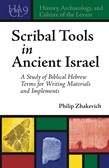
A Study of Biblical Hebrew Terms for Writing Materials and Implements
In this book, Philip Zhakevich examines the technology of writing as it existed in the southern Levant during the Iron Age II period, after the alphabetic writing system had fully taken root in the region. Using the Hebrew Bible as its corpus and focusing on a set of Hebrew terms that designated writing surfaces and instruments, this study ......
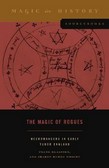
In 1510, nine men were tried in the Archbishops Court in York for attempting to find and extract a treasure on the moor near Mixindale through necromantic magic.
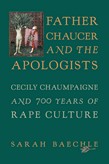
On May 4, 1380, Cecily Chaumpaigne filed a quitclaim with the Chancery in Westminster, releasing the poet Geoffrey Chaucer from any prosecution de raptu meo (on account of my rape). This legal document, lost for centuries, has haunted Chaucer studies since its rediscovery in 1873.
Over the past 150 years since it reemerged, ......
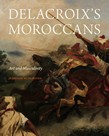
The Women of Algiers in Their Apartment is arguably Eugene Delacroix's best-known work from his trip to Morocco in 1832, and the attention scholars have paid to it has obscured a crucial fact about Delacroix's Moroccan subjects: most of his paintings of North Africa depict men rather than women. After serving as a diplomat's companion on a ......
Nothing excited early modern anatomists more than touching a beating heart. In his 1543 treatise, Andreas Vesalius boasts that he was able to feel life itself through the membranes of a heart belonging to a man who had just been executed, a comment that appears near the woodcut of a person being dissected while still hanging from the gallows. In ......
American Paintings to 1950 at the Palmer Museum of Art
In a New Light is the first permanent collection catalogue in the Palmer Museum of Art's fifty-two-year history. Made possible by a generous grant from the Henry Luce Foundation, this multi-author book studies and celebrates the institution's most significant collection area, American art. The fully illustrated publication features short essays on ......
Christianity is often thought of as a tradition of belief, interpretation, teachings, and texts. However, a scholarly focus on ideas overlooks how early Christian doctrine interacted with social exchanges in lay spaces. Author Caroline Johnson Hodge fills this gap, shifting our attention from liturgical settings to religion as it was lived ......
In the sixteenth century, unprecedented migration caused diseases to take hold in new locales, turning illness and the human body into battlegrounds for competing religious beliefs as well as the colonial agendas they were often ensnared in. This interdisciplinary volume follows the contours of illness, epidemics, and cures in the early modern ......
The findings of Assyriology have been applied to biblical studies ever since the former emerged as a scholarly discipline in the mid-nineteenth century. Today, the scholarly flow from Assyriology to biblical studies continues, yet rarely are the fruits of biblical scholarship brought to bear on the study of ancient Assyria and Babylon. The present ......