The resource guide, for the Spanish edition, includes lesson plans keyed to the state's instructional standards for social studies, answers to section and chapter reviews, four different types of student activity worksheets, tests and answer keys, bibliographies, and resource suggestions.
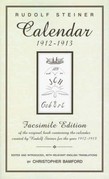
Facsimile Edition of the Original Book Containing the Calender Created by Rudolf Steiner for the Year 1912-1913
"You will find meditative verses for the individual weeks of the year. You should take these meditations quite particularly into your hearts, for they contain what can make the soul alive and what really corresponds to a living relationship of the soul forces to the forces of the macrocosm." Rudolf Steiner Many are familiar with Rudolf Steiner's ......
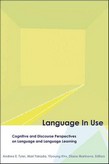
Cognitive and Discourse Perspectives on Language and Language Learning
Brings together perspectives from cognitive linguistics, language acquisition, discourse analysis, and linguistic anthropology. This book examines language processing and first language learning and illuminates the insights that discourse and usage-based models provide in issues of second language learning.
The resource guide includes lesson plans keyed to the state's instructional standards for social studies, answers to section and chapter reviews, four different types of student activity worksheets, tests and answer keys, bibliographies, and resource suggestions.
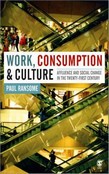
Affluence and Social Change in the Twenty-first Century
The central question in Work, Consumption and Culture is whether consumption has now displaced production as the defining factor in the lives of those in the industrialized West. This book offers a comprehensive review of the key issues in the production// consumption debate, and where it might lead in the future. Key to Paul Ransome's argument is ......
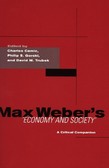
Max Weber's Economy and Society is widely considered the most important single work in sociology and among the most important in the history of the social sciences. This volume provides a critical and up-to-date introduction to Weber's magnum opus. While much has been published about the various parts of Economy and Society, this is the first book ......
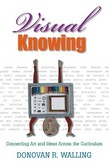
"Offers exciting information organized and presented in a format that is easy to read, understand, and to use in the classroom . . . accessible to teachers in all the subject areas." Pamela Fannin Wilkinson, Educational consultant Houston, TX Energize your lesson planning ideas through the creativity and inspiration of the visual arts! Are you struggling to create memorable, exciting, and effective lesson plans? This invaluable resource demonstrates how you can use the visual arts to provide imaginative lesson plans for all subject areas-from language arts to physical education. Each chapter highlights lesson planning ideas, artists, and works of art, which are given focus by visual thinking questions. Suggested readings and links to websites that offer color images of works of art are also included, while an Idea Guide provides suggestions for fine-tuning both lessons and student assignments. Learn how you can use the visual arts to: Provide imaginative lesson plans for all subject areas Discover thought-provoking ideas and new ways of teaching in the content areas Appeal to the learning styles of a broad range of students, including gifted and talented learners Meet the needs of an integrated curriculum Visual Knowing is an innovative resource to energize your approach to everyday lesson planning by bringing art and creativity to required curriculum topics.
Praise for the Original Edition: "Lots of fresh ideas, along with some very helpful suggestions." -Pamela Galvani, Teacher Central Kitsap High School, Silverdale, Washington Praise for the New Edition: "Useful as the first version of their book was, Marlowe and Page's second edition is even better. It offers a rare blend of thoughtful critique, solid theory, and practical strategy." -Alfie Kohn, author of The Schools Our Children Deserve Make constructivism work for you and your students! Taking students from passive spoon-fed knowledge to creation and acquisition of real learning: It sounds terrific. But how do you do it? This book shows you how. In this updated and expanded second edition, Marlowe and Page use a larger and clearer format to bring together constructivist theory with step-by-step guidance to make constructivist learning a reality in your classroom. Creating and Sustaining the Constructivist Classroom, Second Edition includes the firsthand experiences of practicing teachers to help you understand the challenges and rewards you can expect from constructivism. The teachers' stories along with guidance from the authors give you a solid foundation on which to build your own student-created learning classroom. The authors provide: Active learning examples to customize for any grade or classroom Checklists to help you evaluate your starting point, progress, and goals Expanded coverage of state and national content standards Practical assistance with issues surrounding student assessment, differentiation, and the inclusive classroom Ideas for involving parents and community members Ways to implement technology into the mix Strategies to help even beginning teachers implement constructivist principles Stimulate your students' creativity, autonomy, and independent thinking. Help raise their self-esteem and confidence. Get their minds working on proactive ways to bring real-world learning into their schoolwork. Encourage your students to discover new ways to search for information, process what they find out, and translate it into meaningful knowledge for themselves.