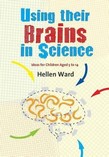
'This is a fascinating and very useful book....I cannot recommend it highly enough. It will inspire you' - School Science Review By focusing on active ways to help 5 to 14 year olds improve their thinking and learning skills in science, this book provides teachers with inspiration and ideas for ways to teach creative, enjoyable and interesting science lessons. Linked to up-to-date research in brain-based learning, the author gives practical advice on topics including: o ways to motivate pupils o developing pupils' skills of detection o the importance of using movement to promote learning o improving pupils' language skills and understanding of scientific vocabulary o suggestions for different ways learners can record in science o effective strategies for assessing learning in science o ideas to promote creativity o the importance of using ICT to support and promote learning. This book is an inspirational read for teachers, student teachers and teaching assistants, and anyone interested in science and how children learn. Helen Ward is Senior Lecturer at Canterbury Christ Church University, Programme Director for the Modular PGCE at Christ Church and also an independent education consultant and active member of the Association for Science Education (ASE).
'This is a fascinating and very useful book....I cannot recommend it highly enough. It will inspire you' - School Science Review By focusing on active ways to help 5 to 14 year olds improve their thinking and learning skills in science, this book provides teachers with inspiration and ideas for ways to teach creative, enjoyable and interesting science lessons. Linked to up-to-date research in brain-based learning, the author gives practical advice on topics including: o ways to motivate pupils o developing pupils' skills of detection o the importance of using movement to promote learning o improving pupils' language skills and understanding of scientific vocabulary o suggestions for different ways learners can record in science o effective strategies for assessing learning in science o ideas to promote creativity o the importance of using ICT to support and promote learning. This book is an inspirational read for teachers, student teachers and teaching assistants, and anyone interested in science and how children learn. Helen Ward is Senior Lecturer at Canterbury Christ Church University, Programme Director for the Modular PGCE at Christ Church and also an independent education consultant and active member of the Association for Science Education (ASE).
This book explores a wide range of theoretical perspectives that guide the practice of community and youth work and related occupational fields. It provides a range of practical activities to encourage readers to explore their own theoretical position, while critically engaging with the contemporary theoretical context that is shaping the development of community and youth work practice. Students will find this book an invaluable tool in developing their understanding of theory, and it will help them to holistically and systematically apply their understanding of theory to their relevant practice situation.
Working with the sound thinking skills children already display as part of their learning, this book takes a practical approach to getting the best out of them. It presents an approach for classroom practice that will encourage children to build on the often quite sophisticated thinking skills they already have and there are lots of practical suggestions and examples for lessons and activities. The following is included: advice on classroom organization; suggestions for group work; ways to use thinking skills in the various subject areas; how to build on the thinking skills children of all abilities display; teaching techniques to promote thinking skills in the classroom. Each chapter ends with a summary of key points for action and practical tasks and examples are provided throughout the book. There is a selection of photocopiable material.
Working with the sound thinking skills children already display as part of their learning, this book takes a practical approach to getting the best out of them. It presents an approach for classroom practice that will encourage children to build on the often quite sophisticated thinking skills they already have and there are lots of practical suggestions and examples for lessons and activities. The following is included: advice on classroom organization; suggestions for group work; ways to use thinking skills in the various subject areas; how to build on the thinking skills children of all abilities display; teaching techniques to promote thinking skills in the classroom. Each chapter ends with a summary of key points for action and practical tasks and examples are provided throughout the book. There is a selection of photocopiable material.
This book presents methods for describing and analyzing dependency and irregularity in long time series. Irregularity refers to cycles that are similar in appearance, but unlike seasonal patterns more familiar to social scientists, repeated over a time scale that is not fixed. Until now, the application of these methods has mainly involved analysis of dynamical systems outside of the social sciences, but this volume makes it possible for social scientists to explore and document fractal patterns in dynamical social systems.
This book helps students and scholars get started on the exciting journey of using visual data in social research. It covers the many uses a researcher can make of images, from creating images as a part of the research process to collecting and analyzing images from diverse sources. Exploring the opportunities and arming readers with tools to overcome some of the practical challenges, Using Visual Data in Qualitative Research is a perfect guide to uncovering new and unexpected dimensions of social life.
The Practical Application of Voice Movement Therapy
Using Voice and Movement in Therapy is a practical and imaginative guide to the way in which physical movement and the expressive use of the voice can facilitate therapy. Paul Newham examines how massage, manipulation and dance, combined with vocal expression, can alleviate certain emotional, psychosomatic and psychological symptoms. His book ......
The Practical Application of Voice Movement Therapy
Using Voice and Song in Therapy is a practical and imaginative guide to the way in which singing and the expressive use of the voice can facilitate therapy. Paul Newham examines how melody creation combined with story-telling in song, can alleviate certain emotional, psychosomatic and psychological symptoms. He describes how the sounds made by the ......