'Steve Bruce's and Steven Yearley's The SAGE Dictionary of Sociology is undoubtedly the most accessible, readable and downright interesting - even amusing - dictionary of its type. In being all of those things - and more - the dictionary does not sacrifice on quality. There are many well-chosen entries and they are quite informative. A useful addition to any scholar's library while at the same time being an excellent resource for both graduate and undergraduate students' - George Ritzer, Distinguished Professor, University of Maryland 'This is a delightful and comprehensive dictionary. The authors write in an engaging and lively style that brings alive the ideas of sociology not only for existing practitioners, but also for a whole new generation of students' - Tim May, Professor of Sociology and Director of the Centre for Sustainable Urban and Regional Futures (SURF), University of Salford 'Prior to seeing the SAGE Dictionary of Sociology, I would have thought that a reference book that reads like a nonfiction bestseller was a conjurer's illusion. Miraculously, 'The Two Steves' (Bruce and Yearley) have pulled it off, and with a refreshing sense of 'brio'. This compendium sets a new level of excellence. The authors have succeeded at one and the same time in covering the sociological landscape in a comprehensive and authoritative manner while writing with an insouciance, dry wit and critical edge . They present key concepts, ideas and personalities such that they are fully accessible to undergraduate students while being of practical use to more established scholars. Highly recommended' - John Hannigan, Professor of Sociology, University of Toronto With over 1000 entries on key concepts and theorists, The SAGE Dictionary of Sociology provides full coverage of the field, clarifying the technical use of apparently common words, explaining the fundamental concepts and introducing new and unfamiliar terms. This book provides: " authoritative, reliable definitions; " accessible 'digests' of key arguments; " contemporary, appealing illustrations of points; " readability. This is not just another dry guide to the discipline. Engagingly written with its audience firmly in mind, it will be the definitive and chosen companion to established textbooks and teaching materials in Sociology and the Social Sciences.
In The Edge of Modernism, Walter Kalaidjian explores American poetry on genocide, the Holocaust, and total war as well as on postwar social antagonisms, racial oppression, and domestic violence. By asking what it means for traumatic memory to have agency in the American verse tradition, Kalaidjian creates an original historical account ......
The intellectual heritage of the Italian Renaissance rivals that of any period in human history. Yet even as the social, political, and economic history of Renaissance Italy inspires exciting and innovative scholarship, the study of its intellectual history has grown less appealing, and our understanding of its substance and significance remains ......
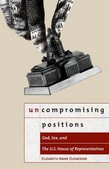
American political institutions are frequently challenged by the significant conflict between those who embrace religious traditionalism and those who embrace progressive cultural norms. This title investigates the politics of that conflict as it is manifested in the proceedings of the US House of Representatives.
Cultural factions are an intrinsic part of the fabric of American politics. But does this mean that there is no room for compromise when groups hold radically different viewpoints on major issues? Not necessarily. For example, in a June 2003 Time/CNN poll, 49% of respondents identified themselves as pro-choice and 46% identified as pro-life. But ......
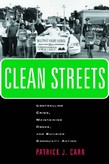
Controlling Crime, Maintaining Order, and Building Community Activism
With the close proximity of gangs and the easy access to drugs, keeping urban neighborhoods safe from crime has long been a central concern for residents. This book draws on five years of research in a white, working-class community on Chicago's South side to see how they tried to keep their streets safe.
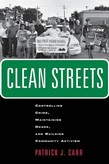
Controlling Crime, Maintaining Order, and Building Community Activism
With the close proximity of gangs and the easy access to drugs, keeping urban neighborhoods safe from crime has long been a central concern for residents. This book draws on five years of research in a white, working-class community on Chicago's South side to see how they tried to keep their streets safe.
Inside the Urban Underground of Dumpster Diving, Trash Picking, and Street Scavenging
In December of 2001, Jeff Ferrell quit his job as tenured professor, moved back to his hometown of Fort Worth, Texas, and, with a place to live but no real income, began an eight-month odyssey of essentially living off of the street. This is the story of this journey into the often illicit worlds of scrounging, recycling, and second-hand living.