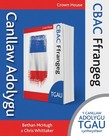
This revision guide has been designed by examiners and experienced teachers to serve as a preparatory resource for students studying WJEC GCSE French through the medium of Welsh and to provide them with useful insights into what to expect in their speaking, listening, reading and writing exams. It is suitable for both Foundation and Higher tier ......
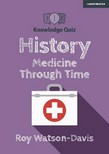
The Knowledge Quiz series is a deviously simple and effective way for students to revise for GCSE subjects. Put together by teaching experts, these easy-to-use books feature tear-out quizzes to help students memorise the large body of knowledge that form the basis of success in exams.Rather than just flicking through revision cards expecting ......
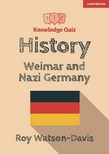
The Knowledge Quiz series is a deviously simple and effective way for students to revise for GCSE subjects. Put together by teaching experts, these easy-to-use books feature tear-out quizzes to help students memorise the large body of knowledge that form the basis of success in exams.Rather than just flicking through revision cards expecting ......
Full teacher support to accompany the Cambridge International IGCSE Art and Design Student's book for syllabus 0400. The Teacher's Guide provides a structure for delivering the course, but also gives teachers the flexibility to teach in their own way, in the best way possible for their particular classroom context.
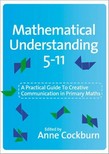
A Practical Guide to Creative Communication in Maths
Sam - a young and enthusiastic trainee teacher - asked the class, 'What is the difference between 7 and 6?'. Jo's hand shot up and he immediately responded, 'Well seven is all straight lines and sixes are all curly.' How can you help children to make progress in mathematical understanding? Children's mathematical misconceptions very often arise as a result of poor communication. This practical and innovative book presents a range of creative strategies to help teachers communicate effectively in the mathematics classroom, offering some new ways of presenting the fundamental concepts and principles of mathematics, and clearly demonstrating that the most effective form of communication is not always verbal. Each chapter focuses on a theme or concept central to the numeracy strategy, such as subtraction, shape and space, constructing and connecting 2D and 3D shapes, data-logging and graph interpretation, and mathematical reasoning. Each chapter supports teachers' subject knowledge as well as suggesting a range of communication strategies (e.g. speaking, listening, drawing, role play, and visual methods such as posters and ICT work) to help teachers and children to share and build on their understanding. All of the activities have been tried and tested in classrooms across Europe. Written by a team of highly experienced teachers, the book will be valuable reading for pre- and in-service teachers, teacher educators and anyone who has an interest in extending the ways children actively engage with mathematics. Teachers with EAL pupils in their class may find it of particular value in communicating mathematical concepts to those who find English difficult. The book is accompanied by a DVD which includes video clips of children at work in mathematics classrooms, software used in the project, copies of material from the book and additional activities.
A Practical Guide to Creative Communication in Maths
Sam - a young and enthusiastic trainee teacher - asked the class, 'What is the difference between 7 and 6?'. Jo's hand shot up and he immediately responded, 'Well seven is all straight lines and sixes are all curly.' How can you help children to make progress in mathematical understanding? Children's mathematical misconceptions very often arise as a result of poor communication. This practical and innovative book presents a range of creative strategies to help teachers communicate effectively in the mathematics classroom, offering some new ways of presenting the fundamental concepts and principles of mathematics, and clearly demonstrating that the most effective form of communication is not always verbal. Each chapter focuses on a theme or concept central to the numeracy strategy, such as subtraction, shape and space, constructing and connecting 2D and 3D shapes, data-logging and graph interpretation, and mathematical reasoning. Each chapter supports teachers' subject knowledge as well as suggesting a range of communication strategies (e.g. speaking, listening, drawing, role play, and visual methods such as posters and ICT work) to help teachers and children to share and build on their understanding. All of the activities have been tried and tested in classrooms across Europe. Written by a team of highly experienced teachers, the book will be valuable reading for pre- and in-service teachers, teacher educators and anyone who has an interest in extending the ways children actively engage with mathematics. Teachers with EAL pupils in their class may find it of particular value in communicating mathematical concepts to those who find English difficult. The book is accompanied by a DVD which includes video clips of children at work in mathematics classrooms, software used in the project, copies of material from the book and additional activities.
This new edition of the author's standards-based math workbook covers essential concepts and skills as defined by the National Council of Teachers of Mathematics (NCTM) for learners in grades 6-9. Designed as a resource for teachers and instructional leaders planning curriculum, instruction, and assessment, the book provides: Detailed guidanceSample activitiesSample problemsSample assessments