The Emergence of National and Ethnic Groups in Prussian Silesia and Austrian Silesia, 1848-1918
The work analyzes the problems of nation building in the Central European region of Silesia during the years 1848-1918, which was influenced by Western European movements, especially German nationalism. The German ethnic model of nation building steeped in language and culture had been replicated in the case of Polish and Czech nationalisms. ......
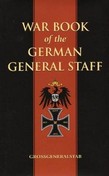
This is imperial Germany's handbook of warfare in World War 1. It talks about allowed and prohibited conduct during war. It includes treatment of enemy prisoners of war, non-combatants, hostages, 'war rebels', spies, terrorists; private property, booty, plundering, war levies; administration of enemy territory and treatment of inhabitants.
The Influenza Epidemic in the U.S. Army during World War I
Fever of War examines the impact of the deadly 1918 influenza epidemic on the American army, its medical officers, and their profession. The tragedy begins with overly confident medical officers whose inflated sense of their ability to prevent disease caused them to undermine the severity of the epidemic.
The Influenza Epidemic in the U.S. Army during World War I
Fever of War examines the impact of the deadly 1918 influenza epidemic on the American army, its medical officers, and their profession. The tragedy begins with overly confident medical officers whose inflated sense of their ability to prevent disease caused them to undermine the severity of the epidemic.
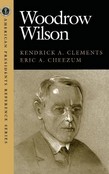
Each volume in the new American Presidents Reference Series is organized around an individual presidency and gathers a host of biographical, analytical, and primary source historical material that will analyze the presidency and bring the president, his administration, and his times to life. The series focuses on key moments in U.S. political history as seen through the eyes of the most influential presidents to take the oath of office. Unique headnotes provide the context to data, tables and excerpted primary source documents. Woodrow Wilson was born on December 28, 1856. He taught history and later political science at Bryn Mawr College, Wesleyan University, and Princeton University. In 1902 he was unanimously elected as president of Princeton. In 1910 he was elected governor of New Jersey. On the forty-sixth ballot at the 1912 Democratic National Convention, Wilson was nominated as the party's presidential candidate. Benefiting from Theodore Roosevelt's ticket-splitting third-party nomination, Wilson was elected the twenty-eighth president of the United States. Key events during the Wilson administration include the reduction of the tariff, enactment of the federal reserve system, creation of the Federal Trade Commission, his narrow reelection against Charles Evans Hughes, Wilson's Fourteen Points, and the League of Nations. On October 2, 1919, Wilson suffered a stroke, which left him incapacitated. Historians have concluded that his wife, Edith, conducted much of the affairs of state on behalf of the invalid Wilson. Woodrow Wilson died on February 3, 1924. This new volume on the presidency of Woodrow Wilson will cover his reformist-natured domestic policies, World War I, the Fourteen Points, and the League of Nations, the role of Edith Bolling Wilson in the Wilson presidency.
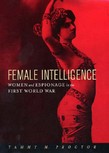
Presents the history of the female spies who served Britain during World War I, focusing on both the powerful cultural images of the woman spy and the realities, challenges, and contradictions of intelligence service. This book interrogates contradictory constructions of gender in the competing spheres of espionage activity.
Harry Spring kept detailed diaries throughout most of his life. Harry died in 1974, but through his diaries he lives to tell us about his experiences. His diary for the time from November 28, 1917 to August 19, 1918 were lost during the fighting in the Argonne Forest, but in 1974, just before he died, he wrote some supplementary notes of what he ......
For William Dean Howells, the 1880s throbbed with literary warfare over theory and criticism (realism), and social justice. But the terrible climax was more personal and came in the death of his daughter in 1889. The blow altered him radically. Among other changes, a poetry new to him emerged, a poetry in the modern tradition. This "new" poetry ......