Jewish Immigrant Life in Yiddish Song and Verse, London 1884-1914
New perspectives on Anglo-Jewish history via the poetry and song of Yiddish-speaking immigrants in London from 1884 to 1914. Archive material from the London Yiddish press, songbooks, and satirical writing offers a window into an untold cultural life of the Yiddish East End. Whitechapel Noise: Jewish Immigrant Life in Yiddish Song and Verse, ......
Including over 37,000 entries compiled by a team of expert Yiddish linguists, Comprehensive Yiddish-English Dictionary surpasses all its predecessors in the number of words and rich selection of idioms, examples of usage, and coverage of stylistic levels and dialect forms. The user-friendly entries include words for standard and literary as well ......
Vivid firsthand accounts reveal the lived experience of London's Jewish East End community. Through the words of twenty-six Yiddish writers, this book offers an unparalleled view into the life, labor, politics, and joys of London's historical Jewish East End community, from its heyday in the 1890s until the 1950s. Drawing from the light ......
Vivid firsthand accounts reveal the lived experience of London's Jewish East End community. Through the words of twenty-six Yiddish writers, this book offers an unparalleled view into the life, labor, politics, and joys of London's historical Jewish East End community, from its heyday in the 1890s until the 1950s. Drawing from the light ......
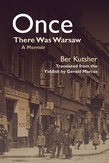
As a young man in interwar Warsaw, newspaperman Ber Kutscher threw himself into the city's vibrant Jewish arts and culture scene from the headquarters of the Association of Jewish Writers and Journalists at Tlomkatse 13. In Once There Was Warsaw, Kutsher's achingly human depictions of writers, cabbies, artists, neighbors, and more are translated ......
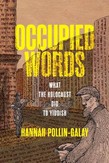
How Yiddish changed to express and memorialize the trauma of the Holocaust The Holocaust radically altered the way many East European Jews spoke Yiddish. Finding prewar language incapable of describing the imprisonment, death, and dehumanization of the Shoah, prisoners added or reinvented thousands of Yiddish words and phrases to describe their ......
In the 1930s, through the prose of Bruno Schulz (1892-1942), the Polish language became the linguistic raw material for a profound exploration of the modern Jewish experience. Rather than turning away from the language like many of his Galician Jewish colleagues who would choose to write in Yiddish, Schulz used the Polish language to explore his ......
Envisioned as a tribe of ruddy-faced, redheaded, red-bearded Jewish warriors, bedecked in red attire who purportedly resided in isolation at the fringes of the known world, the Red Jews are a legendary people who populated a shared Jewish-Christian imagination. But in fact the red variant of the Ten Lost Tribes of Israel is a singular invention of ......
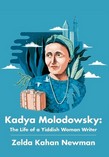
Kadya Molodowsky, the most prolific woman writer of Yiddish, wrote an autobiographical memoir that left many questions unanswered. Why does she say of her wedding day only that she wore new shoes and fell in the snow? Did she join those who saw communism as the answer to the Jewish problem? Why did she leave Israel after having spent only three ......