Winner of the 2008 New Mexico Book Award for Best Cookbook Chile is the heart and soul of New Mexican cuisine and in restaurants across the state visitors are asked, "Red or green?" Diners have strong opinions on which color best complements a dish, so much so that in 1999 "Red or Green?" was adopted as the official state question. In Red or ......
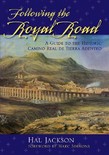
A Guide to the Historic Camino Real De Tierra Adentro
The Camino Real de Tierra Adentro (Royal Road of the Interior Land) is North America's oldest (Juan de Onate extended the Camino to New Mexico in 1598) and longest (1500 miles) road. Here, Hal Jackson brings to life this important route connecting Mexico City with Santa Fe, New Mexico. It was the lifeline for administrative, commercial, and ......
Skullduggery and Double-Dealing in the Texas-New Mexico Borderlands
A vast and desolate region, the Texas-New Mexico borderlands have long been an ideal setting for intrigue and illegal dealings-never more so than in the lawless early days of cattle trafficking and trade among the Plains tribes and Comancheros. This book takes us to the borderlands in the 1860s and 1870s for an in-depth look at Union-Confederate ......
Named a 2024 Southwest Book of the Year by Pima County Public Library On July 16, 1945, just weeks before the atomic bombing of Hiroshima and Nagasaki that brought about the surrender of Japan and the end of World War II, the United States unleashed the world's first atomic bomb at the Trinity testing site located in the remote Tularosa Valley ......
Pueblo Community Persistence in the Northern Rio Grande
A powerful rethinking of resilience through the lens of Pueblo history, this work reveals how Tiwa communities in the Northern Rio Grande used culturally intentional strategies to adapt, transform, and endure across a millennium of change. Anthropologist Michael A. Adler introduces the concept of transilience-culturally intentional acts that ......
Transforming Community-Based Research in the Southwest
Focusing on the Chavez Cave collections in Las Cruces, New Mexico, Collaboration in Practice presents a study of the partnership between New Mexico State University and the Zuni Cultural Resource Advisory Team (ZCRAT). Rather than centering on artifact analysis, the authors emphasize the collaborative process itself-visiting the site, curating an ......
The Impact of the Atchison, Topeka and Santa Fe on the Pueblos of the Rio Grande, 1880-1930
The history of the railroad conquest of the West is well known, but the impact of western railroads on Native Americans has largely been ignored. Richard Frost examines the profound effects that the coming of trains had on Pueblo Indians in New Mexico's Rio Grande Valley. The arrival of the railroad was a social and cultural tsunami. It destroyed ......
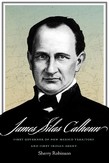
First Governor of New Mexico Territory and First Indian Agent
Veteran journalist and author Sherry Robinson presents readers with the first full biography of New Mexico's first territorial governor, James Silas Calhoun. Robinson explores Calhoun's early life in Georgia and his military service in the Mexican War and how they led him west. Through exhaustive research Robinson shares Calhoun's story of ......
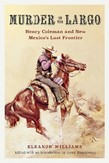
In western New Mexico in 1905 there rode a notorious outlaw from the Mexican border named Henry Coleman. With a Colt .45 strapped to his hip, Coleman (alias Street Hudspeth from the well-to-do Texas family) came to be either despised as a deceitful rustler and ruthless murderer or admired as a man of honor and great courage, a popular and ......