Enables a reckoning with the legacy of the Forgotten War through literary and cinematic works of cultural memory Though often considered "the forgotten war," lost between the end of World War II and the start of the Cold War, the Korean War was, as Daniel Y. Kim argues, a watershed event that fundamentally reshaped both domestic conceptions of ......
African American Adoption in the Wake of the Korean War
The origins of a transnational adoption strategy that secured the future for Korean-black children The Korean War left hundreds of thousands of children in dire circumstances, but the first large-scale transnational adoption efforts involved the children of American soldiers and Korean women. Korean laws and traditions stipulated that ......
Korean Children and Women at the Crossroads of US Empire
An intimate portrait of the postwar lives of Korean children and women Korean children and women are the forgotten population of a forgotten war. Yet during and after the Korean War, they were central to the projection of US military, cultural, and political dominance. Framed by War examines how the Korean orphan, GI baby, adoptee, birth mother, ......
Korean Children and Women at the Crossroads of US Empire
An intimate portrait of the postwar lives of Korean children and women Korean children and women are the forgotten population of a forgotten war. Yet during and after the Korean War, they were central to the projection of US military, cultural, and political dominance. Framed by War examines how the Korean orphan, GI baby, adoptee, birth mother, ......
The Last Custodian of Confucianism and Its Atypical Transformation
In the mid-20th century, Korea was dubbed the last custodian of Confucianism, but it is now very hard to even call the country a truly Confucian society. Following this argument, Quo Vadis Korea? explores critically how some five decades of breakneck industrialization and unbridled modernization could ineluctably change the nation so fundamentally ......
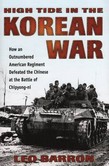
How an Outnumbered American Regiment Defeated the Chinese at the Battle of Chipyong-ni
The story of how one outnumbered American Regiment and an attached French Battalion defeated several Chinese divisions at the Battle of Chipyong-ni and changed the tide of the Korean War.
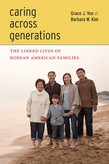
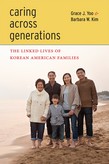
Drawing on interviews with 137 second and 1.5 generation Korean Americans, the authors explore issues such as their childhood experiences, their interpreted cultural traditions and values in regards to care and respect for the elderly, their attitudes and values regarding care for aging parents, and their observations of parents facing retirement.
Drawing on interviews with 137 second and 1.5 generation Korean Americans, the authors explore issues such as their childhood experiences, their interpreted cultural traditions and values in regards to care and respect for the elderly, their attitudes and values regarding care for aging parents, and their observations of parents facing retirement.
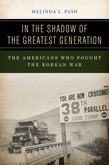
Largely overshadowed by World War II's greatest generation and the more vocal veterans of the Vietnam era, Korean War veterans remain relatively invisible in the narratives of both war and its aftermath. This book deals with this war.