This set, as a collection of representative studies on Japanese Religions, illustrates the diversity and complexity of the Japanese religious experience, past and contemporary, while at the same time offering an overview of the most updated research in the field. The themes selected promote avenues of analysis that place the religious phenomenon in its socio-historical and cultural context. The selection demonstrates the range of religious practices and the contexts in which these practices are performed, with the aim of counterbalancing the traditional foci on either theological (doctrinal) studies or ethnographic studies only. This collection affords a more comprehensive and accurate understanding of the nature and practice of Japanese religiosity. The framework in which the material is presented also offers an alternative to the usual chronological organization of works on Japanese religions, and to traditional arrangements of works on East Asian religions in general according to the categories of Buddhism, Confucianism, Shinto and Christianity. Although these traditional approaches are covered in the first volume, the set as a whole stresses the practice of religion, which stretches across traditions and denominations, and the pre-modern/modern divide.
No published work examines General Henry H. "Hap" Arnold's role in depth during the Pacific War of 1944-1945, in the context of planning for the destruction of Japan. In this new study, Herman S. Wolk, retired Senior Historian of the U.S. Air Force, examines the thinking of Hap Arnold, Commanding General, Army Air Forces (AAF), during World War ......
One of the most prolific and respected directors of Japanese cinema, Naruse Mikio (1905-69) made eighty-nine films between 1930 and 1967. Little, however, has been written about Naruse in English, and much of the writing about him in Japanese has not been translated into English. With The Cinema of Naruse Mikio, Catherine Russell brings deserved ......
This book casts doubt on many prevailing assumptions about the complex relationship between Japan and China. Based on ten years of research in the United States, China, and Japan, the author argues that the relationship is now more dispute-prone but manageable politically, and that the twto countries are more integrated economically than in prior ......
Careers, Development and Control in Corporate Britain and Japan
This text questions the authenticity of the popular image of Japanese personnel and management development, which has been held up as a model in Europe, the US and elsewhere. It uses a comparative approach to address such topics as different systems of selection and recruitment, and contrasting approaches to management control. Japan and Britain ......
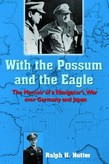
The Memoir of a Navigator's War Over Germany and Japan
Ralph H. Nutter was the lead navigator for Eighth Air Force raids over Germany when he was assigned as Maj. Gen. Curtis ""the Eagle"" LeMay's group navigator. When he was transferred to B-29 Superfortress duty with the Twentieth Air Force in the Pacific, he was picked by Maj. Gen. Haywood ""Possum"" Hansell to be his bomber navigator. Hansell and ......
Colonel Irvin Alexander's Odyssey as a Japanese Prisoner of War
Few American prisoners of war during World War II suffered more than those captured when the Philippines fell to the Japanese in April 1942. In a horrifying captivity that lasted until the war's end, US troops endured the notorious Bataan Death March, overcrowded prison camps, and the stinking "hell ships" that transported them to Japan and ......
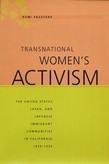
The United States, Japan, and Japanese Immigrant Communities in California, 1859-1920
Following trade agreements between Japan and the US in the 1850s, Tokyo began importing an American commodity: Western social activism. Yasutake illuminates the motivations and experiences of American missionaries, U.S. WCTU workers, and their Japanese proteges.