Witty, bawdy, and vicious, Yusuf al-Shirbini's Brains Confounded pits the "coarse" rural masses against the "refined" urban population. In Volume One, al-Shirbini describes the three rural "types"-peasant cultivator, village man-of-religion, and rural dervish-offering anecdotes testifying to the ignorance, dirtiness, and criminality of each. In ......
Turkish nationalism erupted onto the world stage in the late nineteenth and early twentieth centuries, as first Greeks, then Armenians and other minority groups within the Ottoman Empire began to assert national identity and seek independence. Umut Uzer examines the ideological evolution and transformation of Turkish nationalism from its early ......
Benedict XV's Diplomacy in Greater Syria (1914-1922)
The Vatican and the Emergence of the Modern Middle East examines the originality of Pope Benedict XV's diplomacy (1914-1922) during the First World War and the immediate post-war period in the modern Middle East emerging after the fall of the Ottoman Empire. A thorough exploration of the pontiff's statecraft regarding Syria, Lebanon, and Palestine ......
Authors Richard W. Mansbach and Kirsten L. Taylor examine Middle Eastern issues from a historical perspective and in the context of the current state of affairs, and analyze options for future action. Throughout the text, they emphasize the interplay of foreign and domestic issues in the United States and overseas, and show how that interplay shapes American policy towards the region.
Leg over Leg recounts the life, from birth to middle age, of "the Fariyaq," alter ego of Ahmad Faris al-Shidyaq, a pivotal figure in the intellectual and literary history of the modern Arab world. The always edifying and often hilarious adventures of the Fariyaq, as he moves from his native Lebanon to Egypt, Malta, Tunis, England, and France, ......
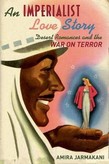
A curious figure stalks the pages of a distinct subset of mass-market romance novels, aptly called "desert romances." Animalistic yet sensitive, dark and attractive, the desert prince or sheikh emanates manliness and raw, sexual power. In the years since September 11, 2001, the sheikh character has steadily risen in popularity in romance novels, ......
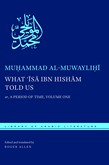
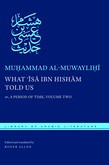
With What 'Isa ibn Hisham Told Us, the Library of Arabic Literature brings readers an acknowledged masterpiece of early twentieth-century Arabic prose. Penned by the Egyptian journalist Muhammad al-Muwaylihi, this exceptional title was first introduced in serialized form in his family's pioneering newspaper Misbah al-Sharq (Light of the East), on ......
With What 'Isa ibn Hisham Told Us, the Library of Arabic Literature brings readers an acknowledged masterpiece of early twentieth-century Arabic prose. Penned by the Egyptian journalist Muhammad al-Muwaylihi, this exceptional title was first introduced in serialized form in his family's pioneering newspaper Misbah al-Sharq (Light of the East), on ......
This interdisciplinary resource brings together important works from the fields of international relations theory and Middle East studies - it promotes a stronger dialogue and cross-fertilisation between the two areas of study. The work's esteemed editorial team has structured the volumes thematically, to allow for ease of navigation and clear understanding of the different key aspects: Volume One addresses the more fundamental and (meta)theoretical issues relating to the debate about the study of Middle East international relations Volume Two looks at the history of the field, addressing the debate about the emergence and evolution of the modern Middle East state system. Volume Three examines more recent debates, and primarily the issue about the role of identity politics in international relations. Volume Four engages with more classic and well-known issues from the general IR debate and explores to what extent assumptions and approaches from these debates are also useful in the study of Middle East international relations. The articles are framed by an introductory essay written by the editors, which helps to guide the reader through the volumes by providing further context and explaining the rationale behind the selection of literature.