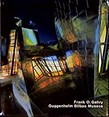
There is no doubt that Gehry's Guggenheim Museum in Bilbao is one of the most spectacular buildings of recent years. It is both the heart of the city and a tested for the arts, representing both public presence and artistic change.
"Outstanding. . . . Brings to life the Apalachee and their Spanish conquerors. In clear, concise prose it paints a picture of the Apalachee and their society and shows how their interactions with Spanish explorers, missionaries, and colonists shaped the history of their society."--John F. Scarry, University of North Carolina at Chapel Hill The ......
Between 1881 and 1897, Benito Perez Galdos, generallyacknowledged as Spain's greatest nineteenth-century novelist, composed sometwenty "contemporary" novels, which Geoffrey Ribbans characterizes as the peakof his achievement. This monumental study traces the evolution of the manystrands that make up one of them: the long and complex novel ......
Explores issues in the phonology and morphology of the major Iberian languages: Basque, Catalan, Galician, Portuguese, and Spanish. In this title, most of the essays are based on innovative theoretical frameworks and show how revolutions in theoretical ideas have affected the study of these languages.
Explores the aftermath of the Franco era in Spain. This title presents an objective and nonpartisan view of the important aspects of contemporary Spanish history and society. It covers such topics as: the transition to democracy; regionalism and nationalism; key players in current affairs; and, politicized approaches to Spanish history.
This translation of Suarez's 54th Disputation documents the ancient Greek and Medieval sources of his discussion. It also considers Suarez's influence upon hitherto unknown late scholastic writers and the relevance of his intentionality theory to figures such as Descartes and Kant.
Between 1585 and 1631, the Spanish playwright Lope de Vega wrote more than forty-five plays dealing with the theme of conjugal honor. Drawing on recent feminist theories and touching on literary, social, and anthropological aspects, Professor Yarbro-Rejarano demonstrates that hierarchical relations of gender, race, and social status mutually ......
Alfonso X the Learned of Castile and His Thirteenth-Century Renaissance
Alfonso X of Castile (1252-1284) was a true philosopher-king, a medieval monarch whose contributions to science, music, historiography, poetry, fiction, and art have had lasting influence. His grand vision was to bring Castile into the mainstream of high civilization and to create a united artistic and religious people. To that end, he established ......