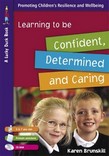
Includes CD-Rom The four books in the series provide a whole-school value based programme for young people from five to twelve years of age. They help in the creation of wellbeing and resilience in students by introducing and developing a range of values and behaviours that will assist with social and emotional health. The series is well differentiated for the target age group and each volume follows a similar format: o introduction; o guidance on how to use the materials; o links to curriculum areas; o comprehensive teacher notes on each theme. The themes are based around stories which will engage young people and these are accompanied by worksheets and follow up activities. Each book can be used individually or together as a complete programme to promote pro-social values. All the books will help young people to: o have a sense of belonging; o identify their talents; o develop proactive problem solving; o enhance positive social orientation; o encourage an optimistic sense of fun.
Praise for the first edition: `The underlying philosophy of this practical book is that raising self-esteem in pupils (including dyslexics) will lead to achievement of higher academic results and fewer behaviour problems. This book is primarily for primary and secondary teachers but would provide much material for discussion among SpLD teachers, given the unexpected and controversial results of Denis Lawrence's research' - Dyslexia Contact `Many useful suggestions offered in this book about learning activities are likely to help pupils to feel better about themselves, to learn to respect others and to experience how feelings can be expressed safely' - British Journal of Special Education Raising self-esteem in pupils can lead to the achievement of higher academic results and fewer behavioural problems. Outlining in simple terms what self-esteem is and providing strategies to support it in the classroom, this book includes clear explanations of the terminology and theory behind self-esteem, and lots of practical examples and useful activities for use with children. The book also covers the main issues surrounding the self-esteem of practitioners. It sets out tried-and-tested strategies that teachers can use to recognise and reduce stress and maintain their self-esteem. This new edition has been fully updated and now includes new case study material and activities.
A Guide to Planning, Implementing, and Assessing Student Projects
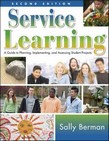
"There is no better way to improve student attitudes and outcomes than to blend both meaningful community and global service with improved academic achievement. Sally Berman invites her readers to do just that." -Bob Koehs, Service Learning Coordinator Marquette-Alger Regional Educational Service Agency "This book is full of practical tips for the classroom teacher, including strategies for assessing student learning." -Jeanine Yard, Learn and Serve Program Officer Michigan Community Service Commission Provide authentic, lasting learning opportunities for students in their own community Service learning offers students the unique opportunity to learn both in the classroom and in the real world. This exciting teaching strategy, detailed in Berman's second edition of Service Learning, motivates students to learn content information, processes, and skills while making authentic connections to their surrounding community. This valuable resource explains the benefits of service learning and provides a step-by-step guide for using the instructional model. It features nine service-learning projects that are broken down into basic, intermediate, and advanced levels. Each project features: Strategies for aligning service and curricular goals Tips for involving students in decision-making Guidelines for managing different phases of the project Activities that foster reflection and self-evaluation Tips for differentiating by tapping into multiple intelligences In this single resource, teachers will find everything they need to successfully implement service learning projects, helping students gain deeper understandings of content while positively impacting their communities.
A Guide to Planning, Implementing, and Assessing Student Projects
"There is no better way to improve student attitudes and outcomes than to blend both meaningful community and global service with improved academic achievement. Sally Berman invites her readers to do just that." -Bob Koehs, Service Learning Coordinator Marquette-Alger Regional Educational Service Agency "This book is full of practical tips for the classroom teacher, including strategies for assessing student learning." -Jeanine Yard, Learn and Serve Program Officer Michigan Community Service Commission Provide authentic, lasting learning opportunities for students in their own community Service learning offers students the unique opportunity to learn both in the classroom and in the real world. This exciting teaching strategy, detailed in Berman's second edition of Service Learning, motivates students to learn content information, processes, and skills while making authentic connections to their surrounding community. This valuable resource explains the benefits of service learning and provides a step-by-step guide for using the instructional model. It features nine service-learning projects that are broken down into basic, intermediate, and advanced levels. Each project features: Strategies for aligning service and curricular goals Tips for involving students in decision-making Guidelines for managing different phases of the project Activities that foster reflection and self-evaluation Tips for differentiating by tapping into multiple intelligences In this single resource, teachers will find everything they need to successfully implement service learning projects, helping students gain deeper understandings of content while positively impacting their communities.
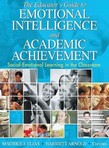
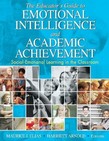
Tap the power of emotional intelligence and watch school-wide achievement soar! "Bringing all this information together in one spot is quite a contribution. There isn't too much research or theory here, but lots of emphasis on 'What can I do on Monday?'" -David A. Squires, Associate Professor, Southern Connecticut State University "I highlighted at least two dozen specific ideas that I will implement in my classroom next year." -Steve Reifman, Teacher, Santa Monica-Malibu Unified School District, CA "Relevant and meaningful for today's educators." -Beverly Eidmann, Principal, Arvada Middle School, CO "Useful, unique (not a crowded field at all!), practical, clearly written." -Robert DiGiulio, Professor of Education, Johnson State College This comprehensive guide to emotional intelligence (EI) is a state-of-the-art collection of proven best practices from the field's best and brightest minds. Edited by educational leaders Maurice Elias and Harriett Arnold, this guide creates a new gold standard for bringing social-emotional learning into every classroom, with chapters by Daniel Goleman, Rachel Kessler, Marty Sleeper and Margot Strom, Janet Patti, Eliot Rosenbloom, Pam Robbins, Mark Greenberg, Sheldon Berman, Susan Wooley, Rose Reissman, Carol Cummings, and many others. Key features cover: Theory and context for EI, including brain development, multiple intelligences, service and citizenship, school-to-work, and health Teacher preparation and professional development 17 best-practice programs in action, relevant to grades PreK-12 An Application/Reflection Guide for note-taking, follow-up, contacts, and ideas for immediate implementation This book is sure to be an essential resource for all teachers, counselors, and school administrators who want their school communities to educate healthier, more responsible, and more successful students.
Tap the power of emotional intelligence and watch school-wide achievement soar! `Bringing all this information together in one spot is quite a contribution... There isn't too much research or theory here, but lots of emphasis on 'What can I do on Monday?' -David A. Squires, Associate Professor, Southern Connecticut State University, New Haven `I highlighted at least two dozen specific ideas that I will implement in my classroom next year.' -Steve Reifman, Teacher, Santa Monica-Malibu Unified School District, CA `Relevant and meaningful for today's educators.' -Beverly Eidmann, Principal, Arvada Middle School, CO `Useful, unique (not a crowded field at all!), practical, clearly written.' -Robert DiGiulio, Professor of Education, Johnson State College This comprehensive guide to emotional intelligence (EI) is a state-of-the-art collection of proven best practices from the field's best and brightest minds. Edited by educational leaders Maurice Elias and Harriett Arnold, this guide creates a new gold standard for bringing social-emotional learning into every classroom, with chapters by Daniel Goleman, Rachel Kessler, Marty Sleeper and Margot Strom, Janet Patti, Eliot Rosenbloom, Pam Robbins, Mark Greenberg, Sheldon Berman, Susan Wooley, Rose Reissman, Carol Cummings, and many others. Key features cover: Theory and context for EI, including brain development, multiple intelligences, service and citizenship, school-to-work, and health Teacher preparation and professional development 17 best-practice programs in action, relevant to grades PreK-12 An Application/Reflection Guide for note-taking, follow-up, contacts, and ideas for immediate implementation This book is sure to be an essential resource for all teachers, counselors, and school administrators who want their school communities to educate healthier, more responsible, and more successful students.
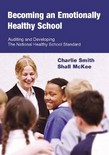
Auditing and Developing the National Healthy School Standard
Includes CD-Rom Pupils can fulfil their potential only when they are healthy, happy and at ease in all areas of their lives and the National Healthy Schools Standard (NHSS) is designed to give practical support to help schools achieve this through creating an environment which reduces health inequalities, promotes social inclusion and raises educational achievement. The book provides the reader with: " an overview of the National Healthy School Standard (NHSS) " insight into the theme of emotional health " a range of case study examples to draw on as exemplars of good practice " knowledge and resources required to undertake a school based audit on emotional health and well being " resources to implement an emotional health and well being curriculum. Becoming an Emotionally Healthy School helps school staff, people working with schools and healthy schools co-ordinators to create, develop and promote a whole school approach to emotional health and well-being. The book offers advice, handy hints and support at each stage of the process and provides all the resources that will be required, including an emotional health curriculum that can be delivered with small groups or whole class groups.
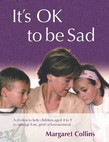
Activities to Help Children Aged 4-9 to Manage Loss, Grief or Bereavement
When a child faces a problem with health or disability we are quick to offer support or change our expectations. Sadness, distress, anxiety, whether transient or long-term, can have significant effects on every child but they are invisible and the support or adjustments might not be in place. In this great resource Margaret uses stories about 20 different life events to: illustrate the range of feelings give permission for the expression of feelings encourage empathy towards others demonstrate that loss is a common experience for us all. The work balances an acknowledgement of the need to express sorrow and sadness with an opportunity to consider how to do something positive for oneself or helpful to others.
Activities to Help Children Aged 4-9 to Manage Loss, Grief or Bereavement
When a child faces a problem with health or disability we are quick to offer support or change our expectations. Sadness, distress, anxiety, whether transient or long-term, can have significant effects on every child but they are invisible and the support or adjustments might not be in place. In this great resource Margaret uses stories about 20 different life events to: illustrate the range of feelings give permission for the expression of feelings encourage empathy towards others demonstrate that loss is a common experience for us all. The work balances an acknowledgement of the need to express sorrow and sadness with an opportunity to consider how to do something positive for oneself or helpful to others.