"This exceptionally well-organized, practical, and impressive work should be on every administrator's and character educator's desk. Olsson redefines the lens through which educators view the factors that impact school climate, teacher-student relationships, student behavior, and ultimately the character development of young people." -Edward DeRoche, Director Character Development Center, University of San Diego "Needed in the character education movement for a long time, this book is written by a principal who's been leading the way and now shows how we can help students develop their character without sacrificing academic standards. It's easy to read, well organized, and, most important, contains hundreds of practical strategies that work." -Hal Urban, Teacher and Speaker, Redwood City, CA Author, Lessons From The Classroom A powerful tool for influencing students' attitudes and behaviors! Based on current research, solid theory, and real experiences, this resource provides school leaders with a comprehensive yet practical framework for creating and sustaining a schoolwide character development program. Real-world scenarios tackle tough issues such as vandalism, truancy, chronic tardiness, and bullying, and demonstrate how to bring about positive change. The book thoughtfully addresses factors that may keep students from developing positive attitudes and helps educators: Evaluate student behavior, staff morale, and school climate Target real problems with commonsense strategies that can dramatically turn around student behavior Assess a character development program's effectiveness
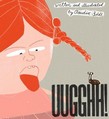
Uugghh! A Slug! Slug feels completely unloved by the world, and can't help feeling it may have something to do with appearances. Happily, new-found friend Spider is on hand to explain that beauty is in the eye of the beholder.
Emotional literacy and health and wellbeing have been placed at the heart of good practice by the Every Child Matters (ECM) agenda and the Early Years Foundation Stage (EYFS) in England, and the Curriculum for Excellence in Scotland, and this book provides clear guidance and lots of practical strategies for how to implement this ethos in your setting. Offering an explanation of emotional literacy, why it matters and how to make it happen in practice, this book looks at ways to promote and develop emotional literacy with young children through: - Circle Time - drama - storytelling - physical education - outdoor play - active learning It highlights the benefits of this ethos for all, and looks at how the emotionally literate setting supports inclusion and promotes achievement. Full of case studies of children aged 3 to 8, ideas for practice, photographs, points for reflection, photocopiable materials, and accompanied by a wide range of downloadable material available on the SAGE website, this is an indispensable guide for the early years practitioner. It is highly relevant to those looking at the transition from Early Years to Primary education, as well as the social, emotional and behavioural needs of young children.
Emotional literacy and health and wellbeing have been placed at the heart of good practice by the Every Child Matters (ECM) agenda and the Early Years Foundation Stage (EYFS) in England, and the Curriculum for Excellence in Scotland, and this book provides clear guidance and lots of practical strategies for how to implement this ethos in your setting. Offering an explanation of emotional literacy, why it matters and how to make it happen in practice, this book looks at ways to promote and develop emotional literacy with young children through: - Circle Time - drama - storytelling - physical education - outdoor play - active learning It highlights the benefits of this ethos for all, and looks at how the emotionally literate setting supports inclusion and promotes achievement. Full of case studies of children aged 3 to 8, ideas for practice, photographs, points for reflection, photocopiable materials, and accompanied by a wide range of downloadable material available on the SAGE website, this is an indispensable guide for the early years practitioner. It is highly relevant to those looking at the transition from Early Years to Primary education, as well as the social, emotional and behavioural needs of young children.
Supporting Student Success Through Emotional Literacy
Includes CD-Rom `This resource was a very valuable tool in helping us to incorporate SEAL lessons into the PSHE curriculum for Years 7 and 8 this year...the activities are set within the context of research into social work and emotional aspects of learning conducted by the author, and, in practice, they work with the students! Feedback from our 7 and 8 students on these lessons was overwhelmingly positive' - Jenny Tinnelly, Henry Floyd Grammar School Are you looking for a quality programme to help promote emotional literacy in your school? School Effectiveness provides a complete activity and resource pack for implementing emotional literacy within your school. Filled with strategies, activities, resources, games, lessons and materials, the pack includes: - A guidebook for teachers, clearly explaining the theory behind emotional literacy and providing practical ideas for the classroom - A CD Rom containing a colour student workbook, designed to involve every student in the development of emotional literacy - Lesson notes, games and copiable activity sheets for classroom use, also available on the CD Rom - A second CD Rom containing the easy-to-install TalkiT software programme, which can be used as a powerful classroom assessment tool to measure and evaluate personal and social development. The CD Rom allows over 30 free trials and uses clear and simple operating instructions throughout. Success at school is more than academic achievement. Personal and social development is just as important. To create this pack, Marilyn Tew led a fascinating project in British secondary schools to uncover how young people felt about school life, showing that, for most, it was personal and social success that was of primary importance. This valuable resource pack takes the findings of Marilyn's research and builds them into exciting practical applications to help students develop self-awareness, self control, motivation and the understanding to get along with others. The additional TalkiT software makes it an essential, all-in-one resource for every school. Marilyn Tew is a visiting fellow of the Graduate School of Education at the University of Bristol. She is experienced in secondary education as a teacher and manager. In addition, she has been a researcher and national trainer in PSHE, groupwork, Circle Time and emotional literacy for the past nine years. Her special interest is groups, particularly the circle, emotional literacy and work with the community to support learning.
The social and emotional needs of children have become increasingly important to educators in recent years, as the impact they have on improving behaviour and promoting inclusion has become evident. Written in an accessible style for busy practitioners, this book gives advice on creating an emotionally and socially 'healthy' school. The book: - shows why schools should promote emotional and social development - includes practical ideas & activities for those working in primary & secondary schools - uses a range of case studies to illustrate the impact of good practice - includes INSET / personal review materials, and audit tools
The social and emotional needs of children have become increasingly important to educators in recent years, as the impact they have on improving behaviour and promoting inclusion has become evident. Written in an accessible style for busy practitioners, this book gives advice on creating an emotionally and socially 'healthy' school. The book: - shows why schools should promote emotional and social development - includes practical ideas & activities for those working in primary & secondary schools - uses a range of case studies to illustrate the impact of good practice - includes INSET / personal review materials, and audit tools
Includes Online Resources 'An ideal resource developed from research, practice and teaching, this book contains everything that a busy teacher needs to support the social and emotional development of her pupils. The scenarios are based upon real life situations and are therefore meaningful and engaging for young people. It can be used in whole class, group or individual work settings, either as a complete step by step teaching programme or as reference resource.' Dr. Ruth MacConville, Author, Head of SENS, L.B. of Ealing This new combined edition of the bestselling Dealing with Feeling and Dealing With More Feeling provides teachers of children aged 7-14 with structured opportunities to develop their emotional literacy and emotional well-being. It is firmly supported by a wealth of research which links children's mental and physical health to the development of emotional literacy. In this second edition, Tina Rae emphasises the development of emotional literacy skills and specifically the development of an emotional vocabulary, empathy, tolerance, resilience and motivation. The focus upon managing more complex and uncomfortable feelings is central to the programme and pupils are introduced to a variety of techniques which can be applied across a broad range of contexts. Included in this exciting resource pack are: - 40 Lesson plans - 236 full-colour activity pages located on the online resources - Role play activities to develop joint problem solving skills Packed with teacher-friendly resources, this book clearly fulfils the requirements of the PSHE curriculum and Healthy Schools agenda whilst also complimenting and building upon many of the themes in the SEAL curriculum (Social and Emotional Aspects of Learning).
Includes CD-Rom Originally developed for deaf children, this innovative and successful drama programme addressing personal, social and emotional needs can benefit all children in primary schools. The interactive and lively ideas cover a variety of themes from empathy to assertiveness. Each of the 6 modules in the book provides 3-5 session plans which include games, drama exercises and discussion that build up the children's exploration of each theme. Copiable resources are included, and a 'How to Use' section has practical suggestions on how the material may be used and adapted for different children and varying situations. An evaluation sheet is also provided which can be used to track the progress of individual children. A final appendix contains a compendium of games which can be interchanged to suit the needs of the children. Bringing together the expertise of a drama teacher and the skills of a teacher of the deaf, the book is a very practical resource providing everything a busy teacher needs to engage all young people as participants in a PSHE curriculum. Angie Wootten has been a teacher of deaf children for over twenty years. She is also a regional tutor and a placement supervisor for the course leading to the qualification as a teacher of the deaf at Birmingham University. In 1999, as a research fellow with the same university, she researched and co-wrote the RNID publication A Review of Good Practice in Deaf Education. In 2002 she completed an MPhil relating to oral communication and deaf adults. Angie has worked with deaf children of all ages, from babies to college students. She is currently working as an outreach teacher in Warwickshire. Jacqui is an actress and Deputy Director of Education for the Royal Shakespeare Company.