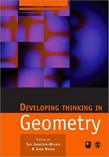
'Geometry is often given less time in the teaching timetable than other aspects of mathematics. This book encourages practitioners to think about and raise its profile, indeed achieving what its title suggest' - Primary Practice `This creative, innovative and fascinating book/CD package is one you "MUST BUY". All prospective, new and experienced teachers of mathematics can use it to transform their teaching. All readers can use it to reignite their fascination with mathematics' - Professor Sylvia Johnson, Sheffield Hallam University 'This book exudes activity and interactivity. Moreover, it provides challenge in the context of a significant pedagogy, one that is not just present but actually made explicit. It is undoubtedly a book to learn geometry with, but also one to learn to think more deeply about geometry, about its nature and essence, and also about its teaching and learning' - David Pimm Developing Thinking in Geometry enables teachers and their support staff to experience and teach geometric thinking. As well as discussing key teaching principles, the book and accompanying interactive CD include many activities that encourage readers to extend their own learning, and consequently their teaching practices. The book is constructed around the following key themes: - invariance; - language and points of view; - reasoning using invariance; - visualising and representing. These themes draw on teaching principles developed by the team at the Open University's Centre for Mathematics Education which has a 20-year track record of innovative approaches to teaching and learning geometry. This is a 'must have' text for all primary mathematics specialists, secondary and Further Education mathematics teachers and their support staff. Anyone who wishes to create an understanding and enthusiasm for geometry based upon firm research and effective practice, will enjoy this book. This is the course reader for the Open University Course ME627 Developing Geometric Thinking
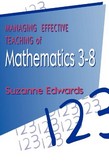
`This wonderful book contains everything you need to know to teach maths to children in the nursery and infant school. It is incredibly thorough, very well thought out and with sufficient detail to satisfy every need from a student writing an essay and planning a lesson, to classroom teachers and those on a masters course. The style is clear, illustrations are thought-provoking and the whole structure of the book demonstrates an in-depth understanding of what early years classroom teachers really want to know.... This book deserves to be read by everyone in early years education because it is so utterly practical - yet also analytical with plenty of cross-references to both research and resources. Great stuff!' - Primary Maths & Science `This book is very thorough, practical and accessible..... I think this book deserves to be on primary bookshelves to be dipped into, because it does encourage good reflective practice and suggests ways of tackling problems effectively. I especially like the way it recognizes that at all times we are dealing with people: parents, children, teachers and other educational professionals' - Mathematics Teaching In this comprehensive study of mathematics curriculum management in nursery and infant schools, the author highlights and clarifies the different elements that have been identified in recent reports as `good practice' in managing the teaching and learning of mathematics in the early years of schooling, with illustrations from practice. The book examines the formulation of a mathematics policy, the role of the mathematics co-ordinator, resource management, partnerships with parents, planning processes, classroom and lesson management, assessment, managing differentiation, record-keeping and reporting. The author offers many practical suggestions for managing the active teaching and learning of mathematics in the classroom.
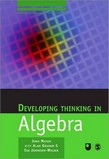
Algebra has always been a watershed for pupils learning mathematics. Nevertheless pupils bring to school all the necessary natural powers for thinking algebraically, including organizing, classifying and generalizing. Developing Thinking in Algebra has been constructed in a way that will enable teachers and their support staff to experience and to teach algebraic thinking to pupils aged 7-16. By integrating pedagogy and subject knowledge through experiencing a variety of tasks for learners, readers of this book will see how to engage all learners in successfully thinking algebraically.
Algebra has always been a watershed for pupils learning mathematics. Nevertheless pupils bring to school all the necessary natural powers for thinking algebraically, including organizing, classifying and generalizing. Developing Thinking in Algebra has been constructed in a way that will enable teachers and their support staff to experience and to teach algebraic thinking to pupils aged 7-16. By integrating pedagogy and subject knowledge through experiencing a variety of tasks for learners, readers of this book will see how to engage all learners in successfully thinking algebraically.
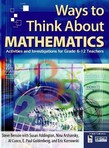
Activities and Investigations for Grade 6-12 Teachers
Ways to Think About Mathematics will fill the gap between what the math teachers learned in college and what they are required to teach in today's classrooms. The book will be divided into five modules that focus on algebraic, geometric and statistical ideas. The book uses immersion in content to help secondary mathematics teachers improve their ......
Activities and Investigations for Grade 6-12 Teachers
Ways to Think About Mathematics will fill the gap between what the math teachers learned in college and what they are required to teach in today's classrooms. The book will be divided into five modules that focus on algebraic, geometric and statistical ideas. The book uses immersion in content to help secondary mathematics teachers improve their ......
Formerly a SkyLight publication. From Toothpicks to Treetops: Quantity and Space in Mathematics serves the needs of the math whiz and the non-mathematically inclined alike by exploring and applying mathematical constructs to everyday situations. By providing a vantage point from which to discern how students' prior knowledge can be used to help expand their mathematical thinking and increase their ability to communicate, author Rita Corbett outlines four ways students can begin to engage in problem solving: Identification Comparison Combination Separation Each method is used to reveal connections between mathematical thoughts, topics, and applications, and activities at the end of each chapter help students understand the relationship of mathematics to their surroundings.
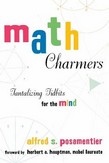
We should all be having fun with math and helping our kids to do better in life by encouraging them to appreciate not only its usefulness but especially its charm. This book is intended for adults looking for a way to turn their kids on to an important subject or discover for themselves what they might have missed in their own math education.
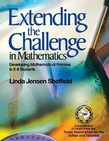
Extending the Challenge in Mathematics is designed to help the general education mathematics teacher challenge his/her student(s) with mathematical promise. By providing math teachers with ready-to-use activities and the tools to create their own activities that will add depth to the standard curriculum, Extending the Challenge in Mathematics will ......