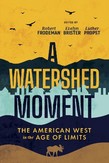
The American West is often portrayed as a place of rugged, unending landscapes presenting us with boundless opportunities. But the land is more fragile and resources more finite than popular perceptions acknowledge. This collection of essays, A Watershed Moment, reveals tensions between a culture of economic growth and personal freedom and the ......
Energy Systems and Aeolian Imaginaries in Western Sahara
As climate crisis ensues, a transition away from fossil fuels becomes urgent. However, some renewable energy developments are propagating injustices such as landgrabs, colonial dispossession, and environmentally destructive practices. Changing the way we imagine and understand wind will help us ensure a globally just wind energy future. Saharan ......
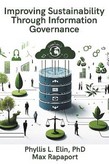
Leveraging Information Governance to Boost Sustainability offers a comprehensive exploration of Environmental, Social, and Governance (ESG) frameworks through the lenses of people, process, and technology.Delving into the intricacies of strategic alignment, management principles, and risk management, the book emphasizes the vital connection ......
In The Business of Sustainability in Fashion, Iva Jestratijevic has written a book that should be on the reading list of every fashion student, educator, and consumer of fashion. It is unique in its focus on critical and creative thinking surrounding corporate and consumer sustainability while succinctly illustrating how interdependent the ......
Opening with the extraordinary story of a young French priest working in 1968 amongst impoverished villages of northeast Brazil, struggling to bring sustenance, sustainability, and hope to these disregarded and willfully ignored communities, this book asks a broad and far-reaching question that challenges the contemporary sustainability movement: ......
Opening with the extraordinary story of a young French priest working in 1968 amongst impoverished villages of northeast Brazil, struggling to bring sustenance, sustainability, and hope to these disregarded and willfully ignored communities, this book asks a broad and far-reaching question that challenges the contemporary sustainability movement: ......
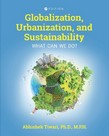
Globalization, Urbanization, and Sustainability: What Can We Do? provides students with an introduction to the multifaceted nature of civilization and its impact on our environment. The text explores the intricate interplay between globalization, urbanization, and sustainability, and examines the environmental and health impacts of modern society, ......
Understanding the Relationship Between Self and Earth
The Psychology of Sustainability: Understanding the Relationship between Self and Earth is a dynamic anthology that, through a uniquely psychological lens, provides students with insight into the connection between humans and their environment. With each chapter, the author presents students with insight into the applicability of psychological ......
Challenges, Contested Knowledge, and the Need for Change
The greatest challenges of the twenty-first century stem from the fact that we are now living in a new epoch: the Anthropocene. The human footprint on the planet can no longer be denied. One of the greatest and most essential human innovations, agriculture, is being increasingly recognised as a leading contributor to climate change. According to global governance bodies, the world will need to feed a predicted nine billion people by 2050. However, in this Anthropocene, we must address the environmental inequalities in how these people will be fed. This book explores our current societal struggles to transition towards more sustainable agrifood systems. It suggests that debates around sustainable agriculture must be social as well as technical, exploring the growth of social movements campaigning for more democratic food systems. However, as each chapter demonstrates, both the problems and the solutions in sustainable agriculture are highly contested. Using the term 'agrifood' to capture the nexus between research, governance and the environment knowledge-environment-governance, this book provides an in-depth and wide-ranging account of current research around agricultural production and food consumption. The book introduces the Anthropocene along with the fundamental question that it poses about human-nature interactions. It outlines the core concerns related to agriculture and food and the debates around the need for agrifood system transitions. Each chapter investigates controversies in the field through case studies. These contributions offer a call for sociologists of agriculture and food to engage with the controversies unfolding in the Anthropocene.