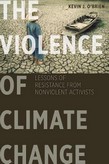
Climate change is viewed as a primarily scientific, economic, or political issue. While acknowledging the legitimacy of these perspectives, the author argues that we should respond to climate change first and foremost as a case of systematic and structural violence.
Climate change is viewed as a primarily scientific, economic, or political issue. While acknowledging the legitimacy of these perspectives, the author argues that we should respond to climate change first and foremost as a case of systematic and structural violence.
Discussions on climate change generally focus on the necessity of reducing carbon emissions, while recognizing that such action will take a long time to materialize. MIT professor Lawrence Susskind contends that communities can take action to combat climate change now, through steps that have the co-benefit of moderating the effects of flooding, ......
Ecologists, like other scientists, have for decades debated their role in society. While some have argued that ecologists should participate in environmental politics, others have focused their attention strictly on scientific issues. In Ecologists and Environmental Politics, now updated with a new preface by the author, Stephen Bocking explores ......
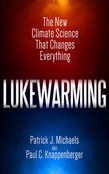
In Lukewarming: The New Climate Science that Changes Everything, Michaels and Knappenberger, two scientists with more than half a century experience between them, explore the realities and myths of global warming--which is more likely to be lukewarm rather than hot.
As our economic and natural systems continue on their collision course, Bruce Jennings asks whether we have the political capacity to avoid large-scale environmental disaster. Can liberal democracy, he wonders, respond in time to ecological challenges that require dramatic changes in the way we approach the natural world? Must a more effective ......
As our economic and natural systems continue on their collision course, Bruce Jennings asks whether we have the political capacity to avoid large-scale environmental disaster. Can liberal democracy, he wonders, respond in time to ecological challenges that require dramatic changes in the way we approach the natural world? Must a more effective ......
'Climate' is an old idea, but an idea which retains tremendous power, versatility and utility in today's world. For the Ancient Greeks, climate worked both as index and as agency , and this dual function has recurred throughout human cultural history and it works too in contemporary discourses about climate change. Climates change physically, but climates can also change ideologically. What climate means to different people in different places in different eras is not stable. If culture is concerned with how human meaning, symbolism and practice take on substantive and material forms, then studying climate through culture is likely to be a fruitful activity. This Major Work is a valuable synopsis of a diffuse discourse and captures some of the most important writing on climate and culture that has appeared since the 1980s. It provides a structure within which the recently growing body of work in human geography, anthropology, sociology and religious studies can be placed. Volume One: Theorising Climate and Culture Volume Two: The Agencies of Climate Volume Three: Reading Climate and Culture in the Past Volume Four: Reading Climate and Culture in the Future Volume Five: Climate and Culture in Places Volume Six: Cultural Representations of Climate
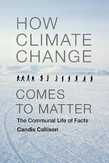
During the past decade, skepticism about climate change has frustrated those seeking to engage broad publics and motivate them to take action on the issue. In this innovative ethnography, Candis Callison examines the initiatives of social and professional groups as they encourage diverse American publics to care about climate change. She explores ......