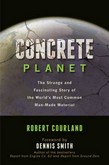
The Strange and Fascinating Story of the World's Most Common Man-Made Material
Tells the story of concrete, one of the world's most common man-made materials - from ancient times to the present day. This title describes how some of history's most famous personalities helped in the development and use of concrete - including King Herod, Emperor Hadrian, Thomas Edison, and Frank Lloyd Wright.
Intellectual Exchange in the Ottoman Empire and Renaissance Europe
Between 1450 and 1550, a remarkable century of intellectual exchange developed across the Eastern Mediterranean. As Renaissance Europe depended on knowledge from the Ottoman Empire, and the courts of Mehmed the Conqueror and Bayezid II greatly benefitted from knowledge coming out of Europe, merchants of knowledge-multilingual and transregional ......
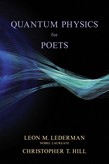
Unlock the mysteries of the universe with this guide that makes one of the most complex fields of science both accessible and as mind-blowing as a great poem.
Quantum theory forms the foundation of modern physics, explaining everything from the tiniest particles to the vast expanse of the cosmos. Yet, for many, ......
It will be of interest to biomedical professionals-especially in oncology, hepatology, and infectious disease-in addition to historians of science and anyone interested in cancer research.
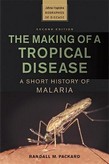
Authoritative, fascinating, and eye-opening, this short history of malaria concludes with policy recommendations for improving control strategies and saving lives.
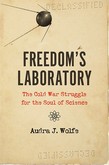
Scientists like to proclaim that science knows no borders. Scientific researchers follow the evidence where it leads, their conclusions free of prejudice or ideology. But is that really the case? In Freedom's Laboratory, Audra J. Wolfe shows how these ideas were tested to their limits in the high-stakes propaganda battles of the Cold ......
Scientists like to proclaim that science knows no borders. Scientific researchers follow the evidence where it leads, their conclusions free of prejudice or ideology. But is that really the case? In Freedom's Laboratory, Audra J. Wolfe shows how these ideas were tested to their limits in the high-stakes propaganda ......
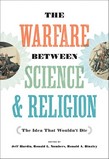
The "conflict thesis"-the idea that an inevitable and irreconcilable conflict exists between science and religion-has long been part of popular imagination. In The Warfare between Science and Religion, Jeff Hardin, Ronald L. Numbers, and Ronald A. Binzley have assembled a group of distinguished historians who explore the ......
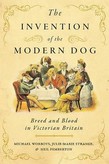
For centuries, different types of dog were bred around the world for work, sport, or companionship. But it was not until Victorian times that breeders started to produce discrete, differentiated, standardized breeds.
In The Invention of the Modern Dog, Michael Worboys, Julie-Marie Strange, and Neil Pemberton explore when, ......