The Deepening Divide: Inequality in the Information Society explains why the digital divide is still widening and, in advanced high-tech societies, deepening. Taken from an international perspective, the book offers full coverage of the literature and research and a theoretical framework from which to analyze and approach the issue. Where most books on the digital divide only describe and analyze the issue, Jan van Dijk presents 26 policy perspectives and instruments designed to close the divide itself.
These volumes bring together major critical responses to, and engagement with, the work of Manuel Castells. Arguably the leading analyst of the current age, Castells' magnum opus, The Information Age, has been compared to the work of Karl Marx and Max Weber. His concept of `the network society' has influenced much recent social science and his ......
Learning and Knowledge for the Network Society discusses technology, policy, and manage-ment in a context much influenced by a dynamic of change and a necessary balance between the creation and diffusion of knowledge. It is largely grounded on empirical experiences of different regional and national contexts and addresses the dynamics of the ......
Between the years 1850 and 1950, Americans became the leading energy consumers on the planet, expending tremendous physical resources on energy exploration, mental resources on energy exploitation, and monetary resources on energy acquisition. This book includes changing ideas about fitness and gender in dialogue with the culture of technology.
Do we control technology or does technology control us? This title brings together readings that focus on the conflicting views concerning the nature of modern technology as it relates to the quality of everyday life and to the larger problems of human survival on this planet.
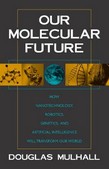
How Nanotechnology, Robotics, Genetics and Artificial Intelligence Will Transform Our World
What will happen to our jobs, health care, and investments when the molecular revolution hits? How might artificial intelligence transform our lives? How can molecular technologies help us cope with climate changes, earthquakes, and other extreme natural threats? This title explores some intriguing possibilities that answer these questions.
This text brings together major European writers, including Ulrich Beck, to discuss issues related to technology, risk and nature. The first section examines the "instrumentalization" of nature and the relation between science, technology and expert systems. These themes are elaborated in the second section by a discussion of the implication of technology (and risk) in late-modern ideas of the "self", individualization and reflexivity. The third section examines the institutionalization of enivironmentalism, the politics of ecology and the role that the social sciences can play in these debates.