A key issue for every laboratory and individual laboratory practitioner is the assessment of risk and a working knowledge of the standards of care established for diagnostic testing via guidelines, major studies and trials. This book addresses common issues and errors seen in the laboratory management process.
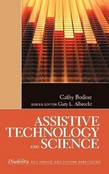
This volume in The SAGE Reference Series on Disability explores issues involving assistive technology engineering and science. It is one of eight volumes in the cross-disciplinary and issues-based series, which incorporates links from varied fields making up Disability Studies as volumes examine topics central to the lives of individuals with disabilities and their families. With a balance of history, theory, research, and application, specialists set out the findings and implications of research and practice for others whose current or future work involves the care and/or study of those with disabilities, as well as for the disabled themselves. The presentational style (concise and engaging) emphasizes accessibility. Taken individually, each volume sets out the fundamentals of the topic it addresses, accompanied by compiled data and statistics, recommended further readings, a guide to organizations and associations, and other annotated resources, thus providing the ideal introductory platform and gateway for further study. Taken together, the series represents both a survey of major disability issues and a guide to new directions and trends and contemporary resources in the field as a whole.
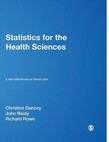
Statistics for the Health Sciences is a highly readable and accessible textbook on understanding statistics for the health sciences, both conceptually and via the SPSS programme. The authors give clear explanations of the concepts underlying statistical analyses and descriptions of how these analyses are applied in health science research without complex maths formulae. The textbook takes students from the basics of research design, hypothesis testing and descriptive statistical techniques through to more advanced inferential statistical tests that health science students are likely to encounter. The strengths and weaknesses of different techniques are critically appraised throughout, and the authors emphasise how they may be used both in research and to inform best practice care in health settings. Exercises and tips throughout the book allow students to practice using SPSS. The companion website provides further practical experience of conducting statistical analyses. Features include: * multiple choice questions for both student and lecturer use * full Powerpoint slides for lecturers * practical exercises using SPSS * additional practical exercises using SAS and R This is an essential textbook for students studying beginner and intermediate level statistics across the health sciences.
Statistics for the Health Sciences is a highly readable and accessible textbook on understanding statistics for the health sciences, both conceptually and via the SPSS programme. The authors give clear explanations of the concepts underlying statistical analyses and descriptions of how these analyses are applied in health science research without complex maths formulae. The textbook takes students from the basics of research design, hypothesis testing and descriptive statistical techniques through to more advanced inferential statistical tests that health science students are likely to encounter. The strengths and weaknesses of different techniques are critically appraised throughout, and the authors emphasise how they may be used both in research and to inform best practice care in health settings. Exercises and tips throughout the book allow students to practice using SPSS. The companion website provides further practical experience of conducting statistical analyses. Features include: * multiple choice questions for both student and lecturer use * full Powerpoint slides for lecturers * practical exercises using SPSS * additional practical exercises using SAS and R This is an essential textbook for students studying beginner and intermediate level statistics across the health sciences.
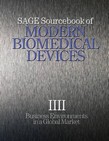
To view sample pages please click on the "Sample Materials and Chapters" link on the left. Special Introductory offer: GBP725.00 Normal price: GBP850.00 SAVE GBP125.00 Biomedical devices undoubtedly represent one of the most striking examples of the revolutionary developments, in both medicine and technology, in the 21st century. The explosive growth of research, scientific output, industrial market development, and investments in today's global applications of scientific and technological knowledge to health care is staggering, and all indications point to the continued increase in all these developments in the years to come. Although a significant number of already existing sources try to address the scientificinical//technological aspects of biomedical devices, there is practically no reference that illustrates to researchers the commercial potential of the results of their research. The SAGE Sourcebook of Modern Biomedical Devices: Business Markets in the Global Environment is the first accessible, broadly available source of information that presents and quantifies the commercial success of numerous types of biomedical devices available in the global market. It is of great importance, for both the research and the business communities, to identify specific biomedical device types, per major therapeutic areas, most commercially successful in today's global economic markets, such as in the biggest market (U.S.), in the Pacific Rim, and in the newly expanded European Union. Currently, such vital information is not available anywhere else, definitely not in a unified source and not in a detailed, well-substantiated, reliable, and easy-to-read form. Key Features - Presents, for the first time in one reference source, unique quantitative data and brief comparative analysis of the commercial performance of more than 180 types of biomedical devices. - Covers devices from practically all major therapeutic areas of application, such as orthopedic devices, cardiovascular devices, gastrointestinal devices, cancer treatment devices, imaging devices, and spinal implants, as well as emerging markets for cardiac surgery devices. - Offers global analysis of markets per device per therapeutic area, including North America, Pacific Rim, and the European Community. - Examines commercial success, market shares, and business potential of the rapidly changing new technologies and the new markets. Thus, this Encyclopedia will be useful as a possible indication of further direction of research, development, and investments in the biomedical device areas globally. - Reflects the latest changes in the marketplace. The information will be periodically updated. - Presents data in a concise, clear, and reader-friendly way, with emphasis on graphs, tables, and charts. The SAGE Sourcebook of Modern Biomedical Devices: Business Markets in the Global Environment is a truly unique resource not only for academic and corporate libraries and working groups but also for researchers and graduate students working in all fields of biomedical devices, in both physical and life sciences, including departments of Engineering, Materials Science, Applied Physics, Chemistry, as well as medical schools and business schools (with the all important emphasis in health care economics). Businesspeople, government organizations, funding agencies, health care providers, and hospital libraries will also find this a welcome addition to their reference collection. Decision Resources, Inc. Decision Resources is a firm that specializes in creating reports regarding drug therapies used for cancer and other disease research. These reports are very detailed and are written by medical professionals, peer reviewed over three rounds and then sold to major pharmaceutical firms. Each report costs $20,000. Decision Resources do not in any way consider themselves a publisher although they create valuable content. Therefore, they are eager to partner with an academic reference publisher in order to sell their content in new markets. The SAGE Handbook of Current Therapies and the SAGE Handbook of Emerging Therapies will serve as two very important resources for medical students at any level that are researching the key drug therapies involved with cancer research. Each set will contain four volumes which will include 60 chapters which will cover respectively the current and emerging drug therapies which tie in all important applications to today's pharmaceutical and biotechnical industries. Each chapter is a synthesis of a previously published detailed report on a particular therapy which has been through several rounds of peer review to insure the utmost accuracy and relevance. Areas covered include: CARDIOVASCULAR DEVICES CARDIOVASCULAR - PERIPHERAL VASCULAR CARDIOVASCULAR - TRANSCATHETER EMBOLIZATION OCCLUSION CARDIOVASCULAR - VASCULAR ACCESS CARDIOVASCULAR - CARDIAC SURGERY ORTHOPEDIC DEVICES ORTHOPEDICS - TRAUMA IMPLANTS ORTHOPEDICS - SPINAL IMPLANTS ORTHOPEDICS - ORTHOPEDIC BIOMATERIALS ORTHOPEDICS - DENTAL IMPLANTS ORTHOPEDICS - OTHER ORTHOPEDICS ENDOSCOPY DEVICES UROLOGY & GYNECOLOGY DEVICES AESTHETIC DEVICES OPHTHALMIC DEVICES DIAGNOSTIC IMAGING HEALTH CARE INFORMATION TECHNOLOGY
Part of a comprehensive training series, this CD-ROM focuses on hip protectors and how they can prevent often debilitating fractures resulting from falls in older people. It is a useful tool for improving falls prevention and patient safety in long-term care settings, assisted living facilities, and hospitals.
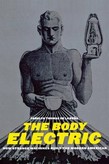
Between the years 1850 and 1950, Americans became the leading energy consumers on the planet, expending tremendous physical resources on energy exploration, mental resources on energy exploitation, and monetary resources on energy acquisition. This book includes changing ideas about fitness and gender in dialogue with the culture of technology.
Between the years 1850 and 1950, Americans became the leading energy consumers on the planet, expending tremendous physical resources on energy exploration, mental resources on energy exploitation, and monetary resources on energy acquisition. This book includes changing ideas about fitness and gender in dialogue with the culture of technology.