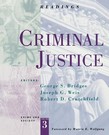
"This is a solid representation of criminological articles that are important to the discipline. The important material from each article has been retained, yet an undergraduate won't be overwhelmed. The articles are germane and flow together; a certain consistency in thought is presented to the student, as opposed to interesting but often semi-related articles. This book is accessible and, in several areas, very enjoyable reading." -- A. L. Marsteller, Drury College Also by the Editors: Crime (Vol. 1) and Juvenile Delinquency (Vol. 2) Why are these edited collections THE anthologies to use for teaching Criminal Justice, Criminology, or Juvenile Delinquency? * All volumes present the field accurately and completely to students and in a way that is understandable to undergraduates and, therefore, teachable. * All include rich collections of classic and contemporary articles, all of which have been carefully edited so that students can master the material. * All volumes contain essays written by the Editors, which provide the coherence and structure to the collections that undergraduate students need. Questions for Discussion and Writing and well-prepared indexes help to make these anthologies even more teachable. * All are edited by scholars who have the credentials and the undergraduate teaching experience to make this three volume set a particularly rich resource.
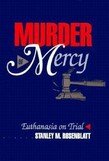
Intends to capture the moment of Dr Rosier's legal ordeal. Describing an intriguing array of legal twists and turns, this book helps you find out why Patricia's father and brothers sought immunity before they would testify, and feel the rush of tension in planning defence strategy: how could anyone explain away Dr. Rosier's confessions?
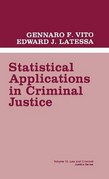
This textbook is specifically designed to give criminology and law students the elements of social statistics. Using examples entirely from criminology, law and justice research, the authors begin with simple mathematical notation and manipulation and work up through: } definitions of major terms } reading of graphs, charts and tables } theoretical basis of statistics, with discussions of probability, sampling and hypothesis testing. Only when the student has a firm mastery of these basic tools do the authors present some of the basic statistical techniques most commonly used in criminal justice research such as t-tests, correlations, simple regression, ANOVA and measures of association.
This textbook is specifically designed to give criminology and law students the elements of social statistics. Using examples entirely from criminology, law and justice research, the authors begin with simple mathematical notation and manipulation and work up through: } definitions of major terms } reading of graphs, charts and tables } theoretical basis of statistics, with discussions of probability, sampling and hypothesis testing. Only when the student has a firm mastery of these basic tools do the authors present some of the basic statistical techniques most commonly used in criminal justice research such as t-tests, correlations, simple regression, ANOVA and measures of association.