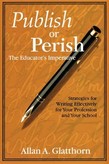
Strategies for Writing Effectively for Your Profession and Your School
In his book Publish or Perish - The Educator's Imperative: Strategies for Writing Effectively for Your Profession and Your School, author Allan A Glatthorn outlines the essential steps to becoming a published writer: from the preliminary phase of focusing on a subject matter, to marketing the published work on-line. While the author illustrates how to write profession specific material, the information he conveys is invaluable to any aspiring author. Publish or Perish - The Educator's Imperative is a reader friendly book with personal accounts of failure and success, detailed advice, and practical information.
Environmentally sustainable business development is an issue of considerable interest to both the academic and policy communities. However, many of the books written on this subject have tended to neglect the important role played by local and regional factors in determining the successes or failures of attempts to achieve environmentally sustainable development. Drawing upon case studies and other illustrative material, three major themes are explored: the origins and consequences of the major environmental problems that face economic activities; the major contextual and operational issues that confront business; and ways of improving the environmental performance and management of business and the role that such activities can play in local and regional development. The overall structure of the book moves from the global to the local level. Detailed case studies on a local and regional scale illustrate the importance of local action in ensuring the greening of businesses and the contribution that environmentally responsible economic activities can make to achieving sustainable development.
This book addresses the rise of China and its impacts on Southeast Asia's economies and businesses, especially on those of ethnic Chinese. It also discusses Southeast Asian government policies, particularly their economic and business policies, towards local Chinese, and Southeast Asian Chinese businesses, both conglomerates and SMEs, in an era of ......
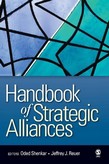
The Handbook of Strategic Alliances covers state-of-the-art research on strategic alliances and serves to pave the road for future alliance research. Little is understood about the specific managerial challenges involved in establishing and operating alliances from their initial setup and throughout their life cycle. The Handbook is intended to fill this gap by looking inside some of the "black boxes" that have been acknowledged in the alliance literature but seldom opened. Leading scholars and practitioners from around the globe chart the alliance literature, its evolution, current state, and future course. An in-depth look at cross-border alliances is examined; followed by an examination of new alliance forms in the new economy, entrepreneurial networks, and collaborations between for-profit and not-for-profit organizations. The Handbook concludes with the examination of methodological issues addressing the prospect for interdisciplinary research. Key Features Covers the theoretical foundations that guide work on inter-firm collaboration, ranging from sociological perspectives to real options theory to diverse traditions within organizational economics Opens the "black boxes" of alliance management across the life-cycle phases Examines cross-border alliances followed by an examination of new alliance forms in the new economy, entrepreneurial networks, and collaborations between for-profit and not-for-profit organizations Reviews existing methodologies with an emphasis on describing unconventional research and its promise for further advancement in the field The introduction of theory interfaces, empirical challenges, unconventional methodologies, and "black box" phenomena are what makes Handbook of Strategic Alliances the perfect resource for students and professional in the areas of Management, Strategy, International business, Organization Behavior / Human Resource Management, Economics, and Sociology.
The work is a practical examination of fundamental strategic issues confronted by firms competing in newly opened markets. It covers emerging markets in East Asia, Central and Eastern Europe and the new states of the former Soviet Union.'
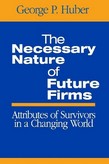
Click 'Additional Materials' for downloadable sample chapter "George Huber makes an important contribution with profound insights on what the future firm will look like. It will be congruent with its environment. To realize opportunities from continuing advances in science and technology and environmental complexity, the successful firm in the ......
"The book makes an interesting and substantive contribution to the field of advertising directly, and also to the entire field of marketing communications or promotion. John Philip Jones presents a new and informed perspective that supports and underpins the need for advertising that works rather than emotive rhetoric that obscures its purpose and ......
Managing Technological Change examines how new workplace technology can improve performance - and how it can have the opposite effect when it is not properly planned and introduced with the participation of key stakeholders. It provides an overview and explanation of the steps involved in: - technology planning - implementation - acquisition, ......
Managing Technological Change examines how new workplace technology can improve performance - and how it can have the opposite effect when it is not properly planned and introduced with the participation of key stakeholders. It provides an overview and explanation of the steps involved in: - technology planning - implementation - acquisition, ......