In this volume, a multidisciplinary group of scholars investigate the changing attitudes towards management decisions in today's workplace. Across a variety of areas traditionally reserved for managerial authority - employee hiring and firing, corporate takeovers and plant closings - managers face an increased likelihood of public and legal scrutiny of their decisions and decision-making processes. Formal procedures, decision-making criteria and the use of legal rhetoric within organizations are all addressed in the book.
Psychoanalyst and organizational consultant Czander asserts the importance of applying in-depth psychology to the organization and its employees by adding to a deeper understanding of the workplace than traditional industrial psychology has offered. He further details a means of intervention in the
Following his immensely successful Images of Organization, in which he develops metaphors to explain the dynamics of organization, Imaginization goes one step further by developing metaphors that speak directly to people about how to get things done on the job. Gareth Morgan shows managers, in business and nonprofit settings, how to form common metaphors to help them interpret and change organizational behaviour.
Intended for students, academics and researchers in organization studies, management and sociology, this book argues that organizational structure is primarily determined by environment as opposed to technology. The essays consider the place of organizations within a wide institutional framework, focusing on educational systems and medical services. "Organizational Environments" is an explication of the author's theoretical positions and has an impact on organizational theory.
This edited collection of articles, many appearing in print for the first time, links the study of gender with the study of organizations. Recent critiques of organizational theory have pointed out that gender issues have a great and previously unexamined impact on organizational structure and performance. The book addresses this issue by bringing together the field's most influential thinkers and writers.
The thesis behind this book is that American industry cannot compete in the marketplace because their organizational structure and management style has become pathologically narcissistic. The theory is illustrated with real-life examples such as the DeLorean automobile business failure.
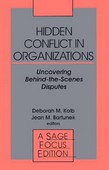
Conflict is a persistent fact of organizational life. Much of it, however, is expressed "behind-the-scenes" in such forms as avoidance, toleration, gossip and vengeance. This book takes examples from a number of organizational settings, arguing that far from being an occasional occurrence, conflict is an embedded phenomena. The contributors go on to illustrate the frequency of conflict, show how conflicts are actually handled and suggest that these conflicts can be better managed for organizational effectiveness. The book is aimed at academics, professionals and students in organization studies, management, business and administration.
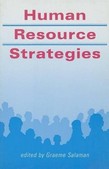
Few would disagree with the principle that successful achievement of an organization's overall strategic objectives is bound up with the design and implementation of appropriate human resource strategies (HRS). Yet many questions remain about what is entailed in implementing effective HRS. This volume brings together a range of outstanding contributions which explore not only the advantages but also the complexities of a strategic approach to human resource management. Deliberately broad in scope to reflect the organization-wide ramifications of HRS, combining theoretical analyses alongside case studies of HRS in practice, the book offers a fascinating review of this crucial topic. The book begins by addressing key themes and debates within the field about the nature and role of human resource management. Succeeding sections then focus on three core organizational arenas inevitably implicated in strategic human resource management - organizational structure, culture and personnel strategies. Human Resource Strategies is a Course Reader for the Open University Course B884 Human Resource Strategies.
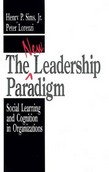
Intended for students, academics and practitioners in organization and management studies, this book focuses on leadership, identified as the dynamic relationship between managers and employees. It shows how the concepts of reinforcement theory, goal setting theory, social learning theory and social cognition theory can be applied by managers on a day-to-day basis. Case studies and on-the-job examples are cited; these serve to back up the theoretical discoveries expounded by the authors.