The countries that make up Southeast Asia are seeing an incredible resurgence in their economic power. Over the past fifty years, their combined wealth has reached the same level as the United Kingdom and, taken together, they are on track to become the fifth-largest world economy. But that stability and success has drawn the attention of the ......
Between 1973 and 1980, the cost of crude oil rose suddenly and dramatically, precipitating convulsions in international politics. Conventional wisdom holds that international capital markets adjusted automatically and remarkably well: enormous amounts of money flowed into oil-rich states, and efficient markets then placed that new money in ......
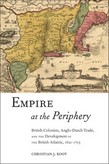
British Colonists, Anglo-Dutch Trade, and the Development of the British Atlantic, 1621-1713
Throughout history the British Atlantic has often been depicted as a series of well-ordered colonial ports that functioned as nodes of Atlantic shipping. This book examines the networks that connected British settlers in New York and the Caribbean and Dutch traders in the Netherlands and in the Dutch colonies in North America and the Caribbean.
Credit, Taste, and Power in the U.S.-China Tea Trade, 1784-1911
Popular history tells the story of how the tea boycott during the American Revolution caused a transition in American taste from tea to coffee, making the young country a coffee-drinking nation. In truth, Americans did not give up their tea so easily, and the United States grew to be the second-largest importer of tea from China. Diverging from ......
Skills development in the East Asia and Pacific region is uneven: some countries build advanced skills while others struggle with basics, facing trade traps or innovation inertia. The report analyzes skills supply and demand, examining how enhanced workforce capacities can match evolving economic opportunities.
East Asia's export-led, labor-intensive growth relied on open markets and abundant basic skills. Rising protection, rapid technological change, aging, and climate risks are eroding this model. The report assesses these shifts and proposes a three-pronged response: harness technology, pursue domestic reforms, and deepen international cooperation.
Amid global fragmentation and trade uncertainty, the book redefines regional integration as a strategic response. It presents a four-pillar blueprint: regional value chains, lower trade frictions, stronger regional agreements, and regional public goods; offering evidence-based strategies to turn fragmented markets into functional production ......
Competition is a core element of economic growth, but empirical evidence on how competition affects productivity in the Latin America and the Caribbean (LAC) region is limited. This study fills this gap with state-of-the-art empirical research, drawing on firm surveys in the formal sector and novel domestic competition enforcement datasets.
This book presents the World Bank's most comprehensive assessment yet of investment in developing economies. It explores why investment matters, why it has stalled in many countries, and what it will take to reignite it.