The disciplines of economics and sociology, normally quite separate, are reconciled in this volume. Amongst the many questions considered are: the formal relationship between the two disciplines in terms of logical structure, types of hypotheses and explanatory models, the distinctive ranges of empirical data which each discipline calls into question, how the substantive findings of one discipline can modify the assumptions of the other. The book explores the historical development of economic theories of society from Marx through Weber, Schumpeter, Polanyi, Parsons and debates on rationality placed in context. The contribution of economic sociology is demonstrated through critical assessments of key areas of the literature such as the state/market division in capitalist and socialist economies, the informal economy and the relation of states and economies to the international arena.
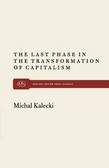
This volume includes six essays, the first dating from 1935 and the last from 1967, by one of the outstanding economists of our time. The economics presented in this volume is political economy worthy of the name: a discipline which shows us the social relations, in particular the class and group conflicts, behind the economic quantitative ......
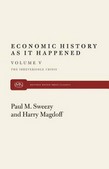
This is the fifth in the important series of essays by the former editors of Monthly Review analyzing the ongoing crisis of global capitalism. Following the multiple interconnected stock market crashes of October 1987, the economies of the capitalist world entered a new and dangerous phase of the crisis that began in the 1970s with the end of the ......
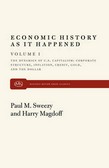
This is the first of the series of four collections of essays in which Paul M. Sweezy and Harry Magdoff, the editors of Monthly Review, chronicled, as it was taking place, the development of U.S. and global capitalism from the end of its "golden age" in the late 1960s to the full onset of the financial explosion of the early 1990s and after. With ......
This is the second in the series of four collections of essays in which Paul M. Sweezy and Harry Magdoff, the editors of Monthly Review, set out as it took place the development of U.S. and global capitalism from the late 1960s to the "financial explosion" age of the early 1990s and after. This second set of essays constitute in their totality a ......
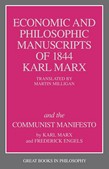
What is man's true nature? How did capitalism gain such a foothold on Western society? What is alienation and how does it threaten to undermine the proletariat? This book addresses these questions. It offers Karl Marx's theory of human nature and an analysis of emerging capitalism's degenerative impact on man's sense of self and his potential.
This book is divided into four parts. Part I covers the background: discussing the growth of Government and describing the pressures towards privatization. Part II consists of three chapters presenting a theoretical basis for privatization while Part III examines privatization in practice and reviews the major empirical studies of the relative ......
This is the fourth in a continuing series of collected essays by the former editors of Monthly Review on the state of the U.S. economy and its relation to the global system. Like its predecessors, this volume focuses on the most recent phase of the development of U.S. capitalism, stressing the profound contradictions of the underlying processes of ......