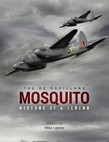
Mosquito History of a Legend is a fascinating telling of the development of the de Havilland DH.98 Mosquito, a British twin- engined, light bomber introduced during WWII.
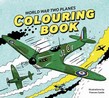
Packed with stunning drawings with a vintage theme, including a Supermarine Spitfire, Lancaster Bomber and B-17 Flying Fortress, this colouring book features over 30 illustrations of iconic aircraft and features action-packed scenes from the air battles over Europe and beyond.
ISBN-13: 9781912423552
(Paperback)
Publisher: UNICORN PRESS Imprint: IMPERIAL WAR MUSEUM
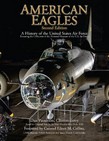
A History of the United States Air Force Featuring the Collection of the National Museum of the U.S. Air Force
Featuring the collection of airplanes, art, photographs, and memorabilia of the National Museum of the U.S. Air Force at Wright-Patterson Air Force Base near Dayton, Ohio, this magnificently illustrated book tells the story of the beginnings of flight, through the creation of the U.S. Air Force as a separate branch of the military, to the ......
Clement M. Keys and the Formation of the American Aviation Industry
Entrepreneurship in aviation took flight during the 1920s, though at the beginning of the decade it was struggling for survival. After World War I, the market was oversaturated with war surplus airplanes, commercial transport a mere dream, and, with no laws or regulations on air travel, aviation lacked investors. Clement M. Keys, a Canadian-born ......
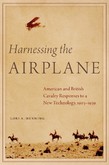
American and British Cavalry Responses to a New Technology, 1903-1939
At its dawn in the early twentieth century, the new technology of aviation posed a crucial question to American and British cavalry: what do we do with the airplane? Lacking the hindsight of historical perspective, cavalry planners based their decisions on incomplete information. Harnessing the Airplane compares how the American and British armies ......
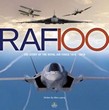
RAF 100 celebrates and commemorates 100 years of the Royal Air Force with access to rare RAF archives, Mike Lepine uses photographs and documents to bring the story of the people, planes and missions to life as never before.
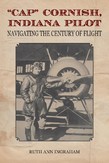
Clarence "Cap" Cornish was an Indiana pilot whose life spanned all but five years of the Century of Flight. Born in Canada in 1898, Cornish grew up in Fort Wayne, Indiana. He began flying at the age of nineteen, piloting a "Jenny" aircraft during World War I, and continued to fly for the next seventy-eight years. In 1995, at the age of ......
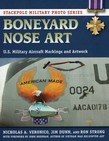
When aircraft retire from active service, they are sent to "boneyards," usually in dry desert locations to limit damage from the elements. There the planes are stored, ready to be revamped for future use or eventually turned into scrap.