Postwar Development Diplomacy and the Struggle over Third World Industrialization, 1945-1956
"Origins of the Suez Crisis" describes the long run-up to the 1956 Suez Crisis and the crisis itself by focusing on politics, economics, and foreign policy decisions in Egypt, Britain, the United States, and the Soviet Union. Based on Arabic source material, as well as multilingual documents from Israeli, Soviet, Czech, American, Indian, and ......
Following on from where 2004's widely acclaimed three-volume SAGE collection, Diplomacy (ed. Jonsson & Langhorne) left off, this new four-volume major work takes a new look at a subject which has matured and developed significantly over the past decade. With the rise of India, China and Brazil as well as of the global south, diplomacy's history looks different. Significant shifts have prompted scholars in the field to reconsider the historical sequences that are relevant to an understanding of what diplomacy is today, and where it may be heading. Increased mediazation of global politics and diplomacy has prompted an exponential growth in literature on public diplomacy. This collection has been carefully structured so that each volume gives the reader an overview of the literature on a new area of development in the study of diplomacy: Volume One: Diplomatic institutions Volume Two: Diplomacy in a Multicultural World Volume Three: The Pluralisation of Diplomacy - Changing Actors, Developing Arenas and New Issues Volume Four: Public Diplomacy
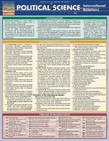
Navigating the complex world of international relations has always been, and continues to be, an important part of being an intelligent world citizen. Whether you are a student of international relations or just looking for a refresher to get up to speed with current events, you will now find it easier to follow along with BarCharts' Political ......
Perspectives on Post-Tsunami and Post-Conflict Aceh
The tsunami that struck a dozen countries around the Indian Ocean on 26 December 2004 evoked international sympathy on a scale beyond any previous natural disaster. The international relief effort broke all records both in scale and diversity, with seven billion U.S. dollars donated from all over the world through public and private agencies for ......
With the disappearance of the imperial structures that had dominated Southeast Asia, newly independent states had to develop foreign policies of their own. But so far few if any of these states have been willing to allow the public to explore any documentation of their activities. Building on his earlier work that drew on U.K. records, the author ......
Trends in the number and scope of peace operations since 2000 evidence heightened international appreciation for their value in crisis-response and regional stabilization. This title addresses national and institutional capacities to undertake such operations. It focuses on developments across regions and countries.
As Reflected in Dr Ismail's Reports Home to Tunku Abdul Rahman
'Dr. Ismail's writings and speeches, and his letters to the Tunku, covering a variety of foreign policy issues, are a valuable asset in understanding the unique role he played in the nation's history. He was without doubt the primary architect of Malayan (Malaysian) Foreign Policy'. - Tengku Tan Sri Dato' Seri Ahmad Rithauddeen, Former Foreign ......
Although the concept of public diplomacy has been part of America's wartime strategy as far back as the Revolutionary War, the term itself is relatively new. In the wake of the events of September 11 and the ensuing War on Terror, there has been an increasing awareness of the negative global image of the United States and intense concern over how communication may be used to improve that image. Within that context, the concept and term public diplomacy have become more notable among practitioners and the American public. Yet public diplomacy has mostly been neglected by scholars and only recently begun to attract academic attention. This volume of The ANNALS commences the first collection of scholarly articles focusing on public diplomacy--the practice through which international actors attempt to advance the ends of policy by engaging with foreign publics--and examines it as an international phenomenon and an important component of statecraft. Most of the papers of this compelling volume sprang from the Center on Public Diplomacy, at the University of Southern California, which launched the first master's degree program in public diplomacy. Although many of the authors provide practitioner experiences to their work, they write from the perspective of academic disciplines. The opening section provides a solid foundation for the theoretical understanding of public diplomacy, with six papers written from a variety of disciplines, including communication, international relations, history, and politics. Next, the focus turns to how practitioners implement public diplomacy. By studying the popular tools of public diplomacy, the second section considers the roles of place branding, international broadcasting, and exchange programs. Although grounded in American scholarship, this volume acknowledges that the concept of public diplomacy is international. Featuring case studies that stretch beyond the United States to Venezuela, Cuba, and China, the final section provides an international composition of the role public diplomacy. Researchers, students, and practitioners alike will find this leading-edge collection of articles to inspire future debate, research, and inquiry in a field of study that is ripe for growth.
Although the concept of public diplomacy has been part of America's wartime strategy as far back as the Revolutionary War, the term itself is relatively new. In the wake of the events of September 11 and the ensuing War on Terror, there has been an increasing awareness of the negative global image of the United States and intense concern over how communication may be used to improve that image. Within that context, the concept and term public diplomacy have become more notable among practitioners and the American public. Yet public diplomacy has mostly been neglected by scholars and only recently begun to attract academic attention. This volume of The ANNALS commences the first collection of scholarly articles focusing on public diplomacy--the practice through which international actors attempt to advance the ends of policy by engaging with foreign publics--and examines it as an international phenomenon and an important component of statecraft. Most of the papers of this compelling volume sprang from the Center on Public Diplomacy, at the University of Southern California, which launched the first master's degree program in public diplomacy. Although many of the authors provide practitioner experiences to their work, they write from the perspective of academic disciplines. The opening section provides a solid foundation for the theoretical understanding of public diplomacy, with six papers written from a variety of disciplines, including communication, international relations, history, and politics. Next, the focus turns to how practitioners implement public diplomacy. By studying the popular tools of public diplomacy, the second section considers the roles of place branding, international broadcasting, and exchange programs. Although grounded in American scholarship, this volume acknowledges that the concept of public diplomacy is international. Featuring case studies that stretch beyond the United States to Venezuela, Cuba, and China, the final section provides an international composition of the role public diplomacy. Researchers, students, and practitioners alike will find this leading-edge collection of articles to inspire future debate, research, and inquiry in a field of study that is ripe for growth.