Fox provides compelling evidence that women candidates are having a profound impact on the electoral pro cess. He studies the congressional races of 1992 and 1994 in California, in which a record 19 women were candidates for House seats. '
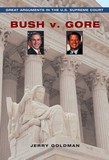
U.S. Supreme Court decisions change the lives of Americans for better or worse. Obviously, the stakes are high for litigants, but the outcomes also affect economic, social, and political life as the Court's actions direct law interpretation throughout the American legal system. Year after year the Supreme Court makes decisions that twist or turn ......
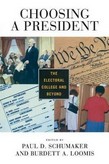
In the midst of the controversy over Election 2000, this new book examines the electoral college and six alternatives to it, such as proportional allocation of electors (rather than winner-take-all electors within the states) and a national popular vote with an instant runoff. A team of expert political scientists consider the implications of the electoral college and proposed reforms, answering such questions as: How would each reform affect our federal system of government, the workings of national governmental institutions, and our party system? What effect would reform have on the conduct of campaign organizations during elections and media coverage of campaigns, citizen participation, and the distribution of power? On the basis of deliberations each contributor indicates the extent to which he or she supports or opposes the electoral college and the various alternatives to it.
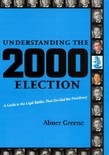
A Guide to the Legal Battles that Decided the Presidency
An accessible, comprehensive guide to the legal battles that finally gave George W. Bush the Presidency five weeks after election night. Abner Greene provides a step by step, non-partisan explanation and analysis of the major legal issues involved in resolving the presidential contest.
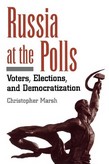
Vladmir Putin's recent election as Russia's president was the culmination of over a decade of competitive elections and attempts at democratic reform. In fact, voting in Russia has become the only legitimate means for gaining a position of political leadership in the government, or for the transfer of power from one set of leaders to another. This important development is traced from Russia's early electoral heritage to the present with examinations of executive, legislative, and local elections. Multiple tables and figures show electoral results and party support.
The 1990s can be characterized as the decade when the Asia-Pacific Rim Nations embraced elections. How Asia Votes focuses on twelve countries and examines how their elections have been conducted, the domestic implications, and how the elections have differed from one another and from elections in the West. While elections had previously been used to justify and legitimate the selection of rulers in several Asia-Pacific countries, the broad acceptance and use of elections to select rulers is a relatively new phenomenon. The fourth in a heralded series of books on comparative elections following New Labour Triumphs: Britain at the Polls, How Russia Votes, and How France Votes.
Nine contributions from Nelson (political science, Rhodes College) and other scholars discuss the presidential and congressional elections of 2000. They analyze factors such as the effects of media coverage, the institutionalization of the presidential debates, and declining voter turnout. Coverage
A data-rich historical picture of American elections and the American electorate, from 1789 to the present.''''A Statistical History of the American Electorate adds a new, never explored dimension to study of the nationAEs political system. Rusk has examined thousands of pieces of information and masses of historical and contemporary numerical data on elections to draw a new picture of our evolving voting ways and byways. His book adds immeasurably to the abundant literature about actual results and voting returns from specific elections by gathering data over time - 200 years - and casting it into historical patterns. The material in each of his eight chapters is introduced with an essay that explains the data and its importance, and sets it all in context.''''''''Chapters include: ''''Election Laws and Suffrage. Lists and dates election laws that define the eligible electorate. Describes qualifications such as property owner-ship, paying taxes, residency, sex, literacy, and many more. Also discusses popular electoral participation such as the initiative and referendum. ''''Voting Participation. Lists three forms of voting participation - turnout, mobilization, and eligibility - as percentage values by the nation, region, and state. This analysis casts light on voter activity as well as the portion of citizens entitled (or barred) from participating at different times in U.S. history.''''Presidential, House, Senate, and Gubernatorial Voting. These four chapters show partisan vote percentages at the national, regional, and state level for Democratic, Republican, and Other categories and the Democratic percent of the major two-party vote. The author uses conventional designations of political parties as well as newly designed alternative descriptions that give a more accurate reflection of the partisan nature of each state. ''Measures of Voting Behavior. Using data from the other chapters, Rusk shows over 200 years of party competition, partisan swing, split-ticket voting, partisan strength and many other dimensions of the electoral system.''''''No other volume brings together such a rich variety of information and sets it in an analytical context. A must-purchase for scholars, graduate and undergraduate students, libraries with political science collections, and anyone interested in the American electoral system.''''''''