Has the United States become more pluribus than unum? In terms of the nation's political beliefs, Robert Booth Fowler answers both yes and no. While his study affirms significant diversity among an elite cadre of public intellectuals, it vigorously denies it in a general public that collectively adheres to the same set of liberal core values. ......
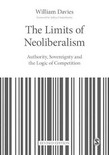
Neoliberalism has become a dirty word. In political discourse, it stigmatizes a political opponent as a market fundamentalist; in academia, the concept is also mainly wielded by its critics, while those who might be seen as actual neoliberals deny its very existence. Yet the term remains necessary for understanding the varieties of capitalism ......
Authority, Sovereignty and the Logic of Competition
Brilliant...explains how the rhetoric of competition has invaded almost every domain of our existence." -Evgeny Morozov, author of To Save Everything, Click Here" "In this fascinating book Davies inverts the conventional neoliberal practice of treating politics as if it were mere epiphenomenon of market theory, demonstrating that their version of economics is far better understood as the pursuit of politics by other means." -Professor Philip Mirowski, University of Notre Dame "A sparkling, original, and provocative analysis of neoliberalism. It offers a distinctive account of the diverse, sometimes contradictory, conventions and justifications that lend authority to the extension of the spirit of competitiveness to all spheres of social life...This book breaks new ground, offers new modes of critique, and points to post-neoliberal futures." -Professor Bob Jessop, University of Lancaster Since its intellectual inception in the 1930s and its political emergence in the 1970s, neo-liberalism has sought to disenchant politics by replacing it with economics. This agenda-setting text examines the efforts and failures of economic experts to make government and public life amenable to measurement, and to re-model society and state in terms of competition. In particular, it explores the practical use of economic techniques and conventions by policy-makers, politicians, regulators and judges and how these practices are being adapted to the perceived failings of the neoliberal model. By picking apart the defining contradiction that arises from the conflation of economics and politics, this book asks: to what extent can economics provide government legitimacy? Now with a new preface from the author and a foreword by Aditya Chakrabortty.
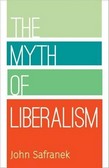
Individual freedom looms large in political and ethical thought. Nevertheless, the theoretical foundations underlying modern liberalism continue to be contested by proponents and opponents alike. The Myth of Liberalism offers a unique contribution to this debate by following through on the often-underdeveloped suggestion that liberal principles ......
Since 2008, the global economic crisis has exposed and deepened the tensions between austerity and social security-not just as competing paradigms of recovery but also as fundamentally different visions of governmental and personal responsibility. In this sense, the core premise of neoliberalism-the dominant approach to government around the world ......
Defining a political ideology as "a guide to political action", reflecting a choice among values and decisions about the relative emphasis to give to them, this book provides a sweeping portrait of the political spectrum of the United States in the 1990s. Proclaiming at the outset his own progressive liberal leanings, the author announces his intention to survey the field with fairness and objectivity. Van Dyke recongnizes first the relevance of 19th century British politics to the current American debate, then proceeds to a detailed analysis of the history and prominent features of progressive liberalism, ranging from Franklin D. Roosevelt and the New Deal, to Lyndon Johnson and the Great Society, to the present-day proponents of governmental activism in the service of liberty and equality. Next, he turns to the individualistic doctrines of libertarianism and "public choice" theory, before differentiating the five basic kinds of conservatism: conservative, economic, social, progressive and neo-. Contending that American ideologies are identified mainly on the basis of stands taken on domestic issues, Van Dyke provides a summary consideration of ideological positions on foreign policy issues, and then concludes his survey with an assessment of the "neoliberal" attitudes espoused by Bill Clinton and some observations on the reasons for ideological disagreements.
ISBN-13: 9781566430173
(Paperback)
Publisher: SAGE PUBLICATIONS Imprint: CHATHAM HOUSE PUBLISHERS INC.,U.S.
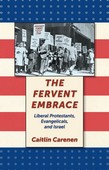
Exploring Liberal Humanism, Jewish Identity, and the American Protest Tradition
New York Public Intellectuals and Beyond gathers a variety of distinguished scholars, from Eugene Goodheart to Peter Novick to Nathan Glazer, from Morris Dickstein to Suzanne Klingenstein to Ilan Stavans, to revisit and rethink the legacy of the New York intellectuals. The authors show how a small New York group, predominantly Jewish, moved from ......
`The author has provided us with a masterful overview and critique of liberal theorizing of the past quarter-century. While dealing exhaustively and fairly with each of a variety of broadly liberal approaches, Gaus also presents a compelling argument for his own preferred "justificatory" approach. His analyses range across familiar territory - ......