Academics are not just researchers, but writers too. Using her many years of practical experience gained as a teacher and editor, Lynn Nygaard guides you through the whole process of writing and presenting your research in order to help you make your voice heard within the academic community. Grounded in real world advice rather than abstract best practice, Nygaard demonstrates a number of approaches to writing in order to help you identify those most suited to your own project. This updated new edition includes: Revised and expanded sections in each chapter More focus on the social sciences A more international focus Updated discussions on publishing practices Annotated biographies for each chapter New illustrations and images Additional practical tips and exercises From defining your audience, to forming your argument and structuring your work, this book will enable you to communicate your research passionately and professionally. Lynn Nygaard is Special Adviser on Project Development and Publications at the Peace Research Institute Oslo (PRIO). This updated new edition includes: Revised and expanded sections in each chapter More focus on the social sciences A more international focus Updated discussions on publishing practices Annotated bibliographies for each chapter New illustrations and images Additional practical tips and exercises From defining your audience, to forming your argument and structuring your work, this book will enable you to communicate your research passionately and professionally.
An Essential Guide to Academic Skills, Personal Development & Employability
Achieve all your goals for university - whatever they are! How to Succeed at University provides straightforward, practical advice for anyone experiencing university life. Introducing the personal, academic and life skills you need to succeed - both at university and in today's competitive job market - you'll find help with managing your time and budget, and guidance on a range of study skills including skills for research and examination success. You'll also learn how to identify and develop key transferable skills that will stay with you throughout your professional life. Discover how to: Improve your employability prospects and give yourself the advantage in the job market Benefit from other students' experience, with top tips and insider advice on succeeding in your studies Explore the uses of digital technologies in learning and assessment Use what you learn right away, with handy downloadable checklists and worksheets. Pragmatic, up-front and sympathetic, this is an essential companion for all undergraduate students, as well as anyone preparing for study at university. The Student Success series are essential guides for students of all levels. From how to think critically and write great essays to planning your dream career, the Student Success series helps you study smarter and get the best from your time at university. Visit the SAGE Study Skills hub for tips and resources for study success!
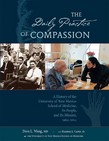
A History of the University of New Mexico School of Medicine, Its People, and Its Mission, 1964-2014
Published in honor of the fiftieth anniversary of the founding of the University of New Mexico School of Medicine, this book provides more than an institutional history. Rich with anecdotes and personality, Dora Calott Wang's account is a must-read for anyone curious about health care in New Mexico. Celebrated for its innovations in medical ......
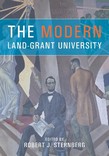
In an increasingly competitive higher education environment, Americas public universities are seeking ways to differentiate themselves. This book suggests that a hopeful vision of what a university should be lies in a reexamination of the land-grant mission, the common system of values originally set forth in the Morrill Land Grant Acts of 1862 ......
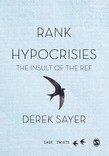
"In crystalline text steeped in cold rage, Sayer takes aim at the REF's central claim, that it is a legitimate process of expert peer review. He critiques university and national-level REF processes against actual practices of scholarly review as found in academic journals, university presses, and North American tenure procedures. His analysis is damning. If the REF fails as scholarly review, how can academics and universities continue to participate? And how can government use its rankings as a basis for public policy?" - Tarak Barkawi, London School of Economics "Sayer makes a compelling argument that the Research Excellence Framework is not only expensive and divisive, but is also deeply flawed as an evaluation exercise. Rank Hypocrisies is a rigorous and scholarly evaluation of the REF, yet written in a lively and engaging style that makes it highly readable." - Dorothy Bishop, University of Oxford Few decisions are as consequential for the funding and reputation of Britain's universities as those of REF panels. Not only do REF rankings determine the levels of research funding universities receive from the state. They equally affect institutions' ability to attract external grants, top-flight faculty, and graduate students. Whatever benefit the UK's periodic research assessment exercises may have brought to research productivity, the REF has been widely criticized for its enormous costs in taxpayers' money and academics' time, its discouragement of innovative (and especially interdisciplinary) research, and its negative effects on collegiality and staff morale. Derek Sayer extends these arguments, notably through his discussion of the questionable staff selection processes used in REF2014 within his own university. Where Rank Hypocrisies goes beyond previous critiques is in its open challenge to the REF's claim to provide 'expert review of the outputs' - the very heart of its legitimacy. Examining the composition and operation of REF disciplinary subpanels in forensic detail, Sayer paints a picture in which overburdened assessors assign vaguely defined grades in fields that are frequently not their own while ignoring all external indicators of the academic influence of the publications they are appraising, and then shred all records of their deliberations. Judged against international norms of peer review, the REF is an elaborate charade - and an insult to the core values of the academy.
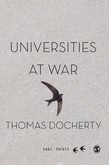
"Docherty is not only is a brilliant critic of those forces that would like to transform higher education into an extension of the market-place... he is also a man of great moral and civic courage, who under intense pressure from the punishing neoliberal state has risked a great deal to remind us that higher education is a civic institution crucial to creating the formative cultures necessary for a democracy to survive, if not flourish." - Henry Giroux, McMasters University "Docherty engages with the secular university in its present crisis, reflecting on its origins and on its role in the future of democracy. He tackles the urgent issue of inequality with a compelling denunciation of the ways of entrenched privilege; he offers a view of governance and representation from the perspective of those who are silenced; and exposes the fundamental damage done to thought by management-speak. Docherty is moral, passionate and committed and this is a fierce and important book." - Mary Margaret McCabe, King's College London There is a war on for the future of the university worldwide. The stakes are high, and they reach deep into our social condition. On one side are self-proclaimed modernisers who view the institution as vital to national economic success. Here the university is a servant of the national economy in the context of globalization, its driving principles of private and personal enrichment necessary conditions of 'progress' and modernity. Others see this as a radical impoverishment of the university's capacities to extend human possibilities and freedoms, to seek earnestly for social justice, and to participate in the endless need for the extension of democracy. This book analyses the former position, and argues for the necessity of taking sides with the latter. It does so with a sense of urgency, because the market fundamentalists are on the march. The fundamental war that is being fought is not just for scholars, but for a better - more democratic, more just, more emancipatory - form of life. Choose sides.
Perfect for graduate students as well as behavioural and social scientists who supervise and conduct research! In the fully updated Fourth Edition of their best-selling guide, Surviving Your Dissertation, Rudestam and Newton answer questions concerning every stage of the dissertation process, including: selecting a suitable topic conducting a literature review developing a research question understanding the role of theory selecting an appropriate methodology and research design analysing data interpreting and presenting results. In addition, this must-have guide covers topics that other dissertation guides often miss, such as the many types of quantitative and qualitative research models available, the principles of good scholarly writing, how to work with committees, how to meet IRB and ethical standards, and how to overcome task and emotional blocks. With plenty of current examples, the new edition features an expanded discussion of online research, data collection and analysis, and the use of data archives, as well as expanded coverage of qualitative methods and added information on mixed methods.
If you are applying to Oxford or Cambridge Universities, you may be required to take one of the Oxbridge-specific admission tests. This text provides all the essential information you need to understand the format and structure of the tests along with vital practice in the sort of questions you will face. The book covers, in detail, the Thinking Skills Assessment (TSA) for both institutions, focusing on critical thinking and problem-solving skills. It includes a practice test with answers and explanations and also guidance on the writing task undertaken by applicants to Oxford. This revised and updated edition includes new material across all parts of the book. It provides enhanced information on interviews and personal statements, coverage of the Sixth Term Examination Paper (STEP), and expanded sections on the other tests for English, history, physics, mathematics and computer sciences. Rosalie Hutton BSc, MSc, MCIPD, is an Occupational Psychologist who has specialised in the field of assessment and testing for 25 years. As CEO of her own company, Rosalie has designed and published a range of psychological assessment measures and is the co-author of a number of assessment books on multiple-choice questions. Glenn Hutton BA, MPhil, FCIPD, is a consultant to organisations concerned with recruitment and selection by way of assessment or examination. Previously a Police Superintendent and Head of the National Police Training Examinations and Assessment Unit, he co-authors books on criminal law and assessment.
If you are applying to Oxford or Cambridge Universities, you may be required to take one of the Oxbridge-specific admission tests. This text provides all the essential information you need to understand the format and structure of the tests along with vital practice in the sort of questions you will face. The book covers, in detail, the Thinking Skills Assessment (TSA) for both institutions, focusing on critical thinking and problem-solving skills. It includes a practice test with answers and explanations and also guidance on the writing task undertaken by applicants to Oxford. This revised and updated edition includes new material across all parts of the book. It provides enhanced information on interviews and personal statements, coverage of the Sixth Term Examination Paper (STEP), and expanded sections on the other tests for English, history, physics, mathematics and computer sciences. Rosalie Hutton BSc, MSc, MCIPD, is an Occupational Psychologist who has specialised in the field of assessment and testing for 25 years. As CEO of her own company, Rosalie has designed and published a range of psychological assessment measures and is the co-author of a number of assessment books on multiple-choice questions. Glenn Hutton BA, MPhil, FCIPD, is a consultant to organisations concerned with recruitment and selection by way of assessment or examination. Previously a Police Superintendent and Head of the National Police Training Examinations and Assessment Unit, he co-authors books on criminal law and assessment.