Communication and Conflict Resolution in the Schools
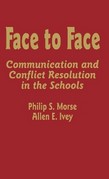
Among the greatest challenges faced by teachers and administrators are how to communicate effectively with students and how to resolve conflicts between them. Face to Face discusses the communication skills and conflict resolution principles necessary for the smooth functioning of schools and the effective teaching of students. The authors present a number of methods for improving teacher-student communication including: the use of reflective listening; open-ended questions; mediation programmes; problem-solving models; and interactive exchange. The book establishes a correlation between good communication skills and positive student outcomes, and offers practical tips that will help improve communication in the school.
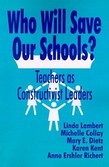
A constructivist leader facilitates professional dialogue and inquiry to enable all teachers to make sense of their work together and to reconstruct the major purposes of schooling. Illustrating their work with vignettes of the activities of such leaders, the authors of this book create a clear picture of constructivist teaching and leadership. They also formulate strategies for altering the school culture to accommodate constructivist leadership.
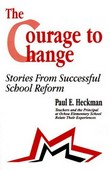
The progress of a complex educational restructuring project in the US state of Arizona is the focus of this book. The goals of the project included: to improve dramatically student achievement in the core subjects; to develop new assessment and evaluation practices; and to develop teaching strategies, curricula and school structures that meet the needs of poor, minority and bilingual students.
Written from extensive experience, this book describes the author's perceptions of the role of the educational superintendent in the United States. Richard C Wallace Jr conveys an image of an educational director who provides vision-based leadership to improve the quality of education for students and the quality of performance of teachers and administrators.
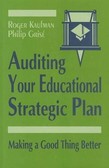
Strategic planning is a familiar concept to educational agencies, and while many have structured their management around it most are disappointed with the results. The authors of this guide offer valuable self-help tools for assessing the efficacy of strategic planning. Complete with a glossary of terms, scoring tables and figures, this book will be helpful to educational administrators who want to improve their school management.
In the book, Joseph Murphy and Lynn G Beck provide a clear understanding of the organizational form, operating characteristics and outcomes of School-Based Management (SBM) in the United States. Following an examination of the definitions, premises and types of SBM, the authors consider its historical perspective and then examine evidence of SBM in the current education reform era. The book concludes with a look at the effects of and lessons learned from the implementation of SBM.
PLACE THIS NEXT TO DONALDSON AND MARNIK IN BROCHURES!!! Intended as a companion to Becoming Better Leaders, this book recounts the experiences and challenges of a group of educators from Maine in their evolving identities as leaders.
In the book, Joseph Murphy and Lynn G Beck provide a clear understanding of the organizational form, operating characteristics and outcomes of School-Based Management (SBM) in the United States. Following an examination of the definitions, premises and types of SBM, the authors consider its historical perspective and then examine evidence of SBM in the current education reform era. The book concludes with a look at the effects of and lessons learned from the implementation of SBM.