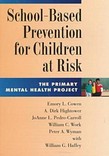
This text describes the evolution and daily operation of the ""Primary Mental Health Project"", a school-based prevention programme that provides a practical alternative to traditional ""after-the fact"" intervention. It describes how to establish, maintain and evaluate such a programme.
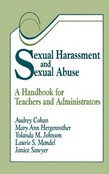
What constitutes sexual harassment between staff members in schools? Between students? Between students and staff? This Handbook examines these questions in relation to adult-to-student and student-to-student interactions. The authors define sexual harassment and abuse in schools, explain how it can be recognized and suggest ways to create and foster a healthy environment free of harassment and abuse. They also outline the best way to handle complaints and discuss policies and procedures that will be supportive to both staff and students.
What constitutes sexual harassment between staff members in schools? Between students? Between students and staff? This Handbook examines these questions in relation to adult-to-student and student-to-student interactions. The authors define sexual harassment and abuse in schools, explain how it can be recognized and suggest ways to create and foster a healthy environment free of harassment and abuse. They also outline the best way to handle complaints and discuss policies and procedures that will be supportive to both staff and students.
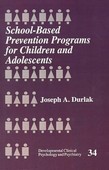
Schools are a natural environment for prevention programmes as an infrastructure exists for reaching large numbers of children during their formative years. This volume evaluates the effectiveness of school-based programmes designed to prevent social problems among young people. The author focuses on prevention of behavioural, social and academic problems, and emphasizes the role of education in substance abuse prevention and health. Durlak argues that the school is a unique social and organizational structure that must be understood before innovations in prevention are introduced. With this in mind, he traces the development of theory and practice, identifies exemplary prevention efforts and documents the continued growth of knowledge in the field.
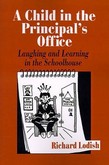
Quoting cases from his teaching experience, the author of this innovative guide demonstrates how humour can be used effectively in teaching. Richard Lodish believes that schools can become more successful if they incorporate more laughter into serious learning, arguing that this will improve children's learning.
One of the primary goals of education is to ensure that children learn varied and complex self-management skills to become more self assured, more self reliant, and responsible for their own behavior, as well as to succeed academically. Although learning experiences designed to actively teach self-management techniques are usually directed toward ......
Based on extensive research, this comprehensive book proposes an alternative view of discipline that incorporates a balance between punishment and positive reinforcement. The authors provide a practical framework for designing and implementing a student discipline programme that includes effective schoolwide strategies, classroom management techniques, non-traditional solutions to discipline problems and studies of types of student misbehaviour. Case studies and examples from model programmes and sample documentation are also included.
Current knowledge about the nature of environmental influences upon children's development is synthesized in this volume. Wachs explores such issues as individual differences in response to stress, medical treatment, parenting styles and teaching approaches, and examines such questions as whether there are certain periods in children's development when they may be more sensitive to specific environmental influences than at other times, and whether girls are more sensitive than boys to parental maltreatment.
Current knowledge about the nature of environmental influences upon children's development is synthesized in this volume. Wachs explores such issues as individual differences in response to stress, medical treatment, parenting styles and teaching approaches, and examines such questions as whether there are certain periods in children's development when they may be more sensitive to specific environmental influences than at other times, and whether girls are more sensitive than boys to parental maltreatment.