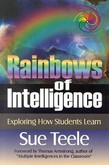
`This book is a pot of gold at the end of the rainbow. Sue Teele elegantly takes the reader from theory to practical application with seamless, integrated lesson which guide, inspire, and ultimately help educators address the needs of all students' - Jo Gusman, President, New Horizons in Education, Inc., Sacramento, California This book explores the multiple ways students process information and examines multiple intelligences through the relationship between rainbows, colours, and how individuals learn. If we consider the full range of human potential as the spectrum of the rainbow, then each individual is unique and has the potential to develop all of the intelligences using different areas of the brain. The author has included several lesson plans that can be adapted for students of any age, and has written them to meet United States and California standards. This book will be a valuable resource for educators and administrators, school boards, and parents.
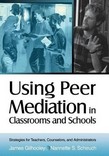
Strategies for Teachers, Counselors, and Administrators
This book offers not only a hands-on training agenda that can be adapted to primary or secondary schools, but also a step-by-step approach to introducing peer mediation to administrators, faculty and staff, students, parents, and the community. The authors have included comprehensive guidelines and forms for everything needed to initiate a peer mediation programme, market it, train participants, and evaluate and expand an existing programme. Many forms are available that can be modified to the specifics of any school and programme. Frequently asked questions are addressed, and many suggestions provided to follow up the training and implementation of the program. This is an excellent guide for teachers, counsellors, administrators, or anyone wanting to introduce students to the benefits of peer mediation
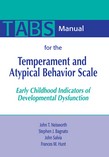
Early Childhood Indicators of Developmental Dysfunction
TABS is specifically designed to identify critical temperament and self-regulation problems that can identify a child's risk as early as possible. This pack includes a TABS screener, a TABS assessment tool, and a TABS manual which covers information for administration and scoring of TABS.
Early Childhood Indicators of Developmental Dysfunction
Traditional developmental tests miss critical temperament and self-regulation problems that can indicate a child's risk for developmental delay. TABS is specifically designed to identify these behavioral indicators as early as possible. For use with children ages 11 to 71 months, TABS can be used for screening, research, determining eligibility ......
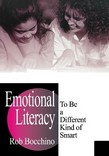
This book is an excellent introduction to emotional literacy for teachers and staff developers. It focuses on background and research on emotional literacy: understanding and managing emotions, communication skills and rapport building; developing an internal coach; and implications and next steps.
`This presents a useful model for conceptualizing pedagogy as professional knowledge, well supported by selected readings' - Dr A Loveless, University of Brighton `This book makes a plea for recreating thinking about knowledge, learning and pedagogy in the context of challenges posed by change - both cultural and technological. Bruner emphasizes that in coming to know, our own knowledge needs to be worked on and transformed, assisted by the toolhouse that is culture. This collection stands as a rich resource from which to exercise our thoughts and reflect on our activities as educators' - British Educational Research Journal This textbook looks at the relationship between views of learning, learners, knowledge and pedagogy. Worldwide, education is being subjected to a succession of policy initiatives and political interventions. Questions of what should be taught, and how, are subjects of constant debate, seldom based on research findings or theoretical principles. The articles in this volume have been chosen to show how theories can provide frameworks for analysing pedagogy and to create a dialogue about new possibilities for advancing practice. Learners and Pedagogy is a Course Reader for The Open University course E836 Learning Curriculum and Assessment.
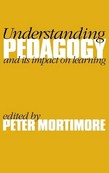
`This presents a useful and thoughtful overview of the ways in which thinking about pedagogy has changed in research and practice' - Dr A Loveless, University of Brighton `I commend it to anyone with a concern for teaching in any of its forms' - School Leadership and Management In this controversial book, Peter Mortimore and a team from London University's Institute of Education explore what is meant by the term pedagogy.They investigate its context and describe some of the recent shifts in thinking about it. Pedagogy affects the way hundreds of thousands of learners of different ages and stages are taught. Yet, until recently, it has been a neglected topic. Instead of having access to systematic evidence about its impact, innovative teachers have been guided only by ideological positions, folk wisdom and fashionable enthusiasms for particular approaches. The contributors to this book, all with professional backgrounds as teachers, have scoured the literature to examine the impact of different pedagogies on nursery, primary and secondary schools as well as on further education colleges, universities and the workplace. The book also considers learners with special educational needs and the implications of using information and communications technology. The authors open up debates on the following key topics: * how best to define pedagogy * what we know about the impact of particular pedagogies on learning what is still not known * whether there are important differences between the pedagogy used for learners of different ages and stages * whether any lessons for the future can be gleaned from current practice. This important book is invaluable reading for interested teachers working with learners of all ages.The issues raised affect the way we think about the teaching of the under fives through to university students and continuing lifelong learners. It is essential reading for policymakers, practitioners and tutors.
`I particularly enjoyed Judith Roden's chapter "Young Children Are Natural Scientists" especially her thoughts on children's drawings, which puncture some popular assumptions' - Times Educational Supplement, Friday Magazine `This expertly argued and fascinating book seeks to redress the balance; it places the child firmly at the centre of the educational process and examines in detail the many and varied factors (such as health and physical development, play, stress, and early intervention) which affect the way in which the young child learns and develops' - Who Minds `Tricia David, an internationally recognized expert in early years education, has brought together 11 tutors from Canterbury Christ Church University College to "encourage debate and disagreement".... It has... some absorbing and helpful contributions which both bring forward the debate in early years education and also may cause readers to reappraise their own practice, possibly as a result of disagreeing with one or other contributors' - International Journal of Early Years Education Young Children Learning brings together current thinking on young children's learning, with ideas about the curriculum for children aged 0 to eight years old. Areas covered in this book include: play; health and physical development; early intervention; stress; children understanding their worlds; bilingualism; children's spiritual development; national identity; young children as natural scientists; assessing learning; the needs of parents, children and teachers; and childhood in changing societies. Written by experienced practitioners from the centre for International Studies in early childhood, Young Children Learning shows that in the earliest years of childhood, all children should experience the delight which can be part of effective pedagogy - pedagogy which takes account of the child's individuality and development, in the context of changing socio-cultural constructions of childhood.
Building on many years' research on class size and student outcomes in the early primary grades of America's public schools, the author advocates class size reduction for increased student achievement on the early years.