`Jagdish Gundara has made a very substantial contribution to the field with this work and it is to the rest of us to make connections with it and help in the gigantic tasks of finding solutions'- Tony Booth, Canterbury Christ Church University, British Journal of Educational Studies `This work deals with the question of how education can help ......
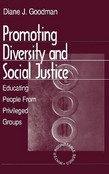
This book offers educational and psychological perspectives to inform practice and increase options in addressing conflict situations. The first part of the book helps the educator understand the reasons for resistance and ways to prevent it. The second part explains how educators motivate dominant groups to support social justice. This book is an ......
A pioneering look at the implications of Christian faith for foreign language education. It has become clear in recent years that reflection on foreign language education involves more than questioning which methods work best. This new volume carries current discussions of the value-laden nature of foreign language teaching into new territory by ......
Voices: The Educational Formation of Conscience aims to revise our thinking about moral education and thus to revise our grasp of how we ought to go about it. Moral education is the formation of conscience and conscience is simply the exercise or reflexive judgment. Thomas F. Green focuses on how conscience is formed by the acquisition of norms ......
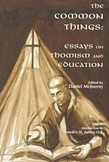
Concerned with the trendy, technocratic, and at times sophistical character of contemporary education at all levels, both public and private, the authors of this collection seek to reinvigorate a Thomistic approach to education appropriate to the problems of our day. With its main inspiration taken from the work of Jacques Maritain, especially his ......
`This presents a useful model for conceptualizing pedagogy as professional knowledge, well supported by selected readings' - Dr A Loveless, University of Brighton `This book makes a plea for recreating thinking about knowledge, learning and pedagogy in the context of challenges posed by change - both cultural and technological. Bruner emphasizes that in coming to know, our own knowledge needs to be worked on and transformed, assisted by the toolhouse that is culture. This collection stands as a rich resource from which to exercise our thoughts and reflect on our activities as educators' - British Educational Research Journal This textbook looks at the relationship between views of learning, learners, knowledge and pedagogy. Worldwide, education is being subjected to a succession of policy initiatives and political interventions. Questions of what should be taught, and how, are subjects of constant debate, seldom based on research findings or theoretical principles. The articles in this volume have been chosen to show how theories can provide frameworks for analysing pedagogy and to create a dialogue about new possibilities for advancing practice. Learners and Pedagogy is a Course Reader for The Open University course E836 Learning Curriculum and Assessment.
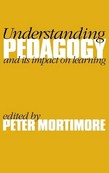
`This presents a useful and thoughtful overview of the ways in which thinking about pedagogy has changed in research and practice' - Dr A Loveless, University of Brighton `I commend it to anyone with a concern for teaching in any of its forms' - School Leadership and Management In this controversial book, Peter Mortimore and a team from London University's Institute of Education explore what is meant by the term pedagogy.They investigate its context and describe some of the recent shifts in thinking about it. Pedagogy affects the way hundreds of thousands of learners of different ages and stages are taught. Yet, until recently, it has been a neglected topic. Instead of having access to systematic evidence about its impact, innovative teachers have been guided only by ideological positions, folk wisdom and fashionable enthusiasms for particular approaches. The contributors to this book, all with professional backgrounds as teachers, have scoured the literature to examine the impact of different pedagogies on nursery, primary and secondary schools as well as on further education colleges, universities and the workplace. The book also considers learners with special educational needs and the implications of using information and communications technology. The authors open up debates on the following key topics: * how best to define pedagogy * what we know about the impact of particular pedagogies on learning what is still not known * whether there are important differences between the pedagogy used for learners of different ages and stages * whether any lessons for the future can be gleaned from current practice. This important book is invaluable reading for interested teachers working with learners of all ages.The issues raised affect the way we think about the teaching of the under fives through to university students and continuing lifelong learners. It is essential reading for policymakers, practitioners and tutors.
The development of the Catholic university in the United States has raised issues about its continued identity, its promise, and its academic constituents. This title explores these questions, especially as they have been experienced in Jesuit history and contemporary commitments.