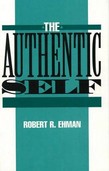
Looking at the topics of personal identity, morality, sexuality, love, and death, this book highlights the value of each individual self as distinguished from the anonymity of our impersonal world. It defines the authentic self as something more than the locus of spatial-temporal identity, the agent of action, and the object of moral duties.
Argues for the adoption of a theory of object relations, combining traditional psychoanalytic theory with contemporary views on attachment behaviour and intersubjectivity. Rogers provides a critical rereading of the case histories of Freud, Winnicott, Lichtenstein, Sechehaye and Bettelheim.
This volume fills a significant gap in the literature by presenting a comprehensive and detailed review of what is known about the antecedents, correlates, and consequences of dependency.
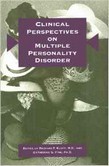
The diagnosis of multiple personality disorder (MPD) entered the clinical mainstream with a rapidity and in a manner atypical for new descriptions of psychiatric illness. This book contains the most up-to-date information on MPD available written by experts in this field.
How do we derive concepts from stories and then use these concepts to understand people? What would have to be added to transform story material from the journalistic or literary to the academic and theoretically enriching? Addressing these and other issues such as the interface between life as lived and the social times, distinguished contributors explore this emerging new field in this unique volume. Beginning with the philosophical framework that underlies the study of narrative, the book covers such questions as: what makes people want to preserve the stories of their past? What methods can be used to deconstruct a narrative text? Can what we learn from people's narratives of their past be used to account for their current psychological functioning? What happens if people lose their ability to narrate their story? Can people's narrative accounts tell us something about identity and its development?
Offers an evaluation of claims that personality, aptitude, and psychological and physical health can be determined through handwriting analysis. This book assesses graphology's accuracy through objective tests of validity, contrasts graphology with certifiable psychological assessment techniques, and reviews the legality of using graphology.
Offers an evaluation of claims that personality, aptitude, and psychological and physical health can be determined through handwriting analysis. This book assesses graphology's accuracy through objective tests of validity, contrasts graphology with certifiable psychological assessment techniques, and reviews the legality of using graphology.
In this account of the purpose, practice and outcomes of groupwork with women, the author draws on her own involvement in establishing and running community based womens' groups. The book provides accounts of the structured content of group sessions and the definitions and measurements of change developed by women participants themselves. By examining the impact of group process and dynamics on self and group identity, the book accentuates the changes which take place during and after the life of a group. The book offers a convincing rationale for adopting a feminist approach with women isolated in their own communities who bear the brunt of socio-political disadvantages, but a central tenet of the book is that feminist groupwork is applicable across a range of settings in the state and private sectors. The authors also address the conflicts which can arise from working from a feminist perspective within mainstream organizational settings. Throughout, the focus is on women's perceptions and explanations of themselves and their experiences, where women's groups promote alternative potentially liberating interpretations which have profound consequences on women's lives. The book demonstrates the distortions and inadequacies of mainstream psychological interpretations of female behaviour and highlights the ways in which these oppress and constrain women.
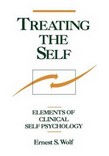
This book is about how an analyst analyzes. Rooted in the theory of psychoanalytic self-psychology as put forth by Heinz Kohut and his colleagues, Treating the Self focuses specifically on the application of the self-psychological concept of the psyche to the actual conduct of psychoanalytic treatment. The result is not a ``how to'' approach, but ......