The move from an industrial to a post-industrial society has been documented by many, as has the impact of this new order on the macro-level institutions of society - government, the workplace and the economy. But what does post-industrial life mean to the individual and for relationships between people? Hage and Powers examine that question, linking global changes in the work patterns, information flow and knowledge to the practice of everyday life. Their answer is that the complexification of society requires a different kind of person. Creativity, flexibility and emotional astuteness will become the watchwords of the future, personality traits that will enable people to successfully adapt to the ever-changing swirl of workplace, familial, personal and leisure roles. Based on the tenets of social theory, the authors present both a vision of the future and a plan for personal and interpersonal action.
The book discusses how modern group therapy can be successfully employed in a variety of hospital and medical settings. It includes the needs of special populations such as adolescents, elderly patients, HIV-positive and AIDS patients, patients who abuse substances, and trauma patients.
This edited collection of articles, many appearing in print for the first time, links the study of gender with the study of organizations. Recent critiques of organizational theory have pointed out that gender issues have a great and previously unexamined impact on organizational structure and performance. The book addresses this issue by bringing together the field's most influential thinkers and writers.
This book explores the process of interpersonal conflict - from the initial decision as to whether or not to confront differences through to how to plan the actual confrontation. It deals extensively with negotiation and, where negotiation proves unsuccessful, with third-party dispute resolution. To avoid destructive or violent behaviour, Donohue emphasizes the importance of keeping conflicts under control and of focusing on the pertinent issues. He argues that the key to managing conflict is to address differences collaboratively so that the parties can create better solutions and, ultimately, strengthen their relationships.
Starting from the premise that the major threats against human survival today are caused by human behaviour, this work explores how we can act to assure our common survival. Emphasis is placed on the psychological forces and processes that contribute to the creation of social and global problems.
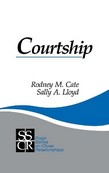
This fascinating volume focuses on courtship, paying particular attention to the differences between relationship and courtship development and deterioration. The authors describe factors that affect the later course of marriage, trace historical roots of courtship, discuss models of courtship that have guided research in this area and examine circumstantial factors that discriminate between stable and unstable premarital relationships. They also explore the `dark side' of courtship - violence between dating partners - and reveal the processes involved in the dissolution phase of premarital relationships. The volume concludes with a look at the future of courtship as an institution and suggestions for further research.
This major new series reproduces an authoritative selection of the most significant articles in different areas of psychology. It focuses in particular on influential articles which are not found in other similar colelctions. Many of these articles are only available in specialized journals and therfore are not accessible in every library. This ......
Group Psychotherapy with Substance Abusers and Family Members
Based on the author's 18 years of experience supervising group therapists, this quintessentially practical book is designed to help practitioners think through and formulate appropriate strategies in their clinical work. Utilizing many clinical examples, and providing explanations throughout for her interventions, Vannicelli pays special attention ......