`This book offers a truly engaging "read". The writing style is good and it gives the reader a wide range of perspectives, from the meta-theoretical to the concrete practical experience of clients and counsellors.... David Rennie's book serves to continue the development as well as the exposition of the person-centred approach to counselling' - ......
This innovative book probes the language of family systems theory, demonstrating how metaphors shape our understanding both of families themselves and of the goals and process of therapy. The author shows how a deeper understanding of standard theoretical metaphors--and the development of alternatives--can help clinicians and students identify ......
This text argues that psychologists should become involved in dealing with impending ecological threats because ecological degradation will be one of the leading causes of human pain and suffering in the 21st century.
George Kelly's personal construct theory, first published in 1955, is as radical today as it was then. Describing how each one of us goes about our daily life trying to make sense of the events around us, it maintains that we are in charge of what we do in the world, that we do not merely react to events. This book reveals that George Kelly was a man of enormous intellect, of many talents and of great complexity. Fay Fransella outlines how his views have influenced the theory and practice of psychotherapy, and illustrates how his training in physics and mathematics influenced his theory and led to the development of one of his methods of measurement - the repertory grid. The book also describes Kelly's philosophy of constructive alternativism, which suggests that we have created and can therefore recreate ourselves, and that what is true for the individual, rather than some external truth, is what matters. This philosophy can be seen as a precursor of the current emphasis on constructivism. Criticisms of Kelly's work and examples of work carried out within this framework since his death are also featured.
Recent debate has increasingly focused on the prominence of metaphor and rhetoric in psychological discourse. Underpinning this research is the view that psychology offers a unique insight into the creation of persuasive texts and that such a discipline needs to become itself an object of inquiry. In developing this view "Psychology as Metaphor" scrutinizes a wide range of traditional psychological theory including neuropsychology and memory, childhood development, the IQ debate, accounts of emotion, and psychological descriptions of the mind, to show how rhetorical strategies and the deployment of metaphor are central to the work of creating a convincing theoretical account. This book explores the distinction between philosophy and rhetoric, and offers an interdisciplinary analysis of theories of metaphor and language while pointing to future directions for research in the study of scientific rhetoric. Its theoretical breadth is matched by the book's wide-ranging treatment of key thinkers from Darwin, James and Freud, through Watson, Lashley, Piaget, Vygotsky, Skinner and Burt to recent texts from writers in contemporary psychology such as Kamin, Eysenck, Rumelhart and Shallice. This book should be useful reading for psychologists, historians and sociologists of science, philosophers of the social sciences and anyone with an interest in how the study of rhetoric can shed light on the creation of persuasive psychological theory.
This influential book challenges one of the most pervasive and powerful beliefs of our time--that Europe rose to modernity and world dominance due to unique qualities of race, environment, culture, mind, or spirit, and that progress for the rest of the world resulted from the diffusion of European civilization. J. M. Blaut persuasively argues that ......
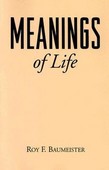
Who among us has not at some point asked, ``what is the meaning of life?'' In this extraordinary book, an eminent social scientist looks at the big picture and explores what empirical studies from diverse fields tell us about the human condition. Meanings of Life draws together evidence from psychology, history, anthropology, and sociology, ......
Humanistic psychology and behaviour analysis have long been viewed as staunch opponents in the practice of psychology. The author's research into the theories, positions, and approaches of both camps dispels the myths of behaviourists as cold "manipulators" and of humanistic psychologists as weak-willed "armchair philosophers".
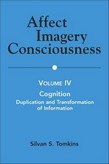
Volume IV: Cognition: Duplication and Transformation of Information
Tomkins' magnum opus, Affect Imagery Consciousness, was published by Springer Publishing Company in four volumes over 30 years. When Tomkins began writing the book in the 1950's, American psychology was dominated by psychoanalytic and behaviorist theories - neither of which placed much importance on the role of basic emotions in everyday human ......