'Cavadino and Dignan's Penal Systems: A Comparative Approach looks across national boundaries to see how penal systems differ and why. It is hands-down the most comprehensive and up-to-date book on the subject and should become a staple textbook for use in law and social science courses on comparative penal policy and practice' - Michael H. Tonry, ......
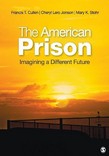
For the first time in four decades, prison populations are declining and politicians have reached the consensus that mass imprisonment is no longer sustainable. At this unique moment in the history of corrections, the opportunity has emerged to discuss in meaningful ways how best to shape efforts to control crime and to intervene effectively with offenders. This breakthrough book brings together established correctional scholars to imagine what this prison future might entail. Each scholar uses his or her expertise to craft-in an accessible way for students to read-a blueprint for how to create a new penology along a particular theme. For example, one contributor writes about how to use existing research expertise to create a prison that is therapeutic and another provides insight on how to create a "feminist" prison. In the final chapter the editors pull together the "lessons learned" in a cohesive, comprehensive essay.
`[A] useful and informative book. ...I would recommend it to students wanting a good introduction to the current issues in criminal justice and probation' - Vista: Perspectives on Probation `The three chapters on treatment in practice are all excellent; the treatment of sex offenders, mentally disordered offenders and the treatment of drug ......
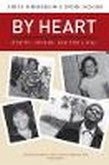
A two-person memoir that explores education, prison, possibility, and which children our world nurtures and which it shuns. At the books core are two stories that speak up for human imagination, spirit, and the power of art. "A boy with no one to listen becomes a man in prison for life and discovers his mind can be free. A woman enters prison ......
Punishment and Civilization examines how a framework of punishment that suited the values and standards of the civilized world came to be set in place from around 1800 to the late 20th century. In Punishment and Civilization, John Pratt draws on research about prison architecture, clothing, diet, hygienic arrangements and changes in penal language ......
Explaining U.S. Imprisonment examines women in prison, minorities, the historical path to the modern prison, a wide range of contemporary issues, and social influences on prison reform. While focusing on prisons, this one-of-a-kind book is written within the context of the sociology of punishment and covers cutting-edge topics such as detaining immigrants, the War on Terror, and prison in the 21st century. Features Uses a historical and social framework to place U.S. corrections and imprisonment policies in context Includes first-hand accounts from inmates, as well as primary source documents written by early prison reformers Integrates research on women, men, and minorities throughout, rather than separating each topic into a stand-alone chapter Begins chapters with thought-provoking quotes to set the stage for the content that follows Explaining U.S. Imprisonment is ideal for use as a supplementary text in undergraduate and graduate courses on corrections, imprisonment, and theories of punishment. It is also appropriate for use in courses on criminal justice, incarceration, minority issues in law, sociology of law, and the study of the modern prison system.
Explaining U.S. Imprisonment examines women in prison, minorities, the historical path to the modern prison, a wide range of contemporary issues, and social influences on prison reform. While focusing on prisons, this one-of-a-kind book is written within the context of the sociology of punishment and covers cutting-edge topics such as detaining immigrants, the War on Terror, and prison in the 21st century. Features Uses a historical and social framework to place U.S. corrections and imprisonment policies in context Includes first-hand accounts from inmates, as well as primary source documents written by early prison reformers Integrates research on women, men, and minorities throughout, rather than separating each topic into a stand-alone chapter Begins chapters with thought-provoking quotes to set the stage for the content that follows Explaining U.S. Imprisonment is ideal for use as a supplementary text in undergraduate and graduate courses on corrections, imprisonment, and theories of punishment. It is also appropriate for use in courses on criminal justice, incarceration, minority issues in law, sociology of law, and the study of the modern prison system.
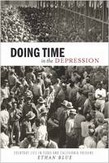
The California Institution for Women, Tehachapi, once stood in the stark and windswept Cummings Valley, 130 miles northeast of Los Angeles. The state's first prison for female inmates, the facility served, between 1933 and 1952, as a 'laboratory' where penologists and reformers - mostly women - aimed to rehabilitate formerly 'bad women' via a ......