African Americans and Law Enforcement in Birmingham, Memphis, and New Orleans, 1920-1945
Throughout the Jim Crow era, southern police departments played a vital role in the maintenance of white supremacy. Police targeted African Americans through an array of actions, including violent interactions, unjust arrests, and the enforcement of segregation laws and customs. Scholars have devoted much attention to law enforcement's use of ......
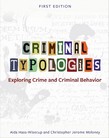
Criminal Typologies: Exploring Crime and Criminal Behavior provides students with an insightful exploration into the study of crime types and criminals. The text is organized into five modules. The opening module discusses the academic study of crime types and criminals, key issues in the study of crime, and the process of developing a criminal ......
African Americans and Law Enforcement in Birmingham, Memphis, and New Orleans, 1920-1945
Throughout the Jim Crow era, southern police departments played a vital role in the maintenance of white supremacy. Police targeted African Americans through an array of actions, including violent interactions, unjust arrests, and the enforcement of segregation laws and customs. Scholars have devoted much attention to law enforcement's use of ......
The Wild West Life of Texas Ranger Captain Frank Jones
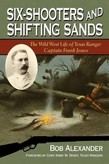
Many well-read students, historians, and loyal aficionados of Texas Ranger lore know the name of Texas Ranger Captain Frank Jones (1856-1893), who died on the Texas-Mexico border in a shootout with Mexican rustlers. In Six-Shooters and Shifting Sands, Bob Alexander has now penned the first full-length biography of this important nineteenth-century ......
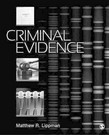
Using plenty of examples, public policy perspectives, and references to actual cases, this text features: Chapter Opening Vignette: Each chapter will be introduced by a vignette based on an actual case relating to the subject-matter of the chapter. Learning objectives which will be articulated at the beginning of each chapter. The applicable Federal Rules of Evidence, which will be reprinted and discussed throughout the text. These rules will be contrasted with previous approaches and the different approaches of various state codes will be noted. You Decide: The chapters will include three or four scenarios based on actual cases Discussion boxes: An "Evidence in the News" feature and an "Evidence and Public Policy" feature will be included in each chapter. Tables, diagrams, and excerpts from trial transcripts Each chapter will conclude with an edited legal case ("Case Analysis") that covers a challenging issue relating to the material covered in the chapter). Contemporary examples and issues, such as technology and scientific evidence and "false confessions" and current coverage of the Fourth, Fifth and Sixth and Fourteenth Amendment issues .
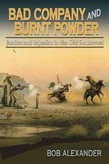
Bad Company and Burnt Powder is a collection of twelve stories of when things turned ""Western"" in the nineteenth-century Southwest. Each chapter deals with a different character or episode in the Wild West involving various lawmen, Texas Rangers, outlaws, feudists, vigilantes, lawyers, and judges. Covered herein are the stories of Cal Aten, ......
In this second edition, historians Chuck Parsons and Donaly E. Brice present a complete picture of N. O. Reynolds (1846-1922), a Texas Ranger who brought a greater respect for the law in Central Texas. Reynolds began as a sergeant in famed Company D, Frontier Battalion in 1874. He served honorably during the Mason County ""Hoo Doo"" War and was ......
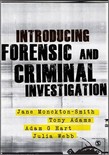
This book is a lucid and practical guide to understanding the core skills and issues involved in the criminal investigation process. Drawing on multiple disciplines and perspectives, the book promotes a critical awareness and practical comprehension of the intersections between criminology, criminal investigation and forensic science, and uses active learning strategies to help students build their knowledge. The book is organised around the three key strategic phases in a criminal investigation: - Instigation and Initial Response - The Investigation - Case Management Each strategic phase of the investigative process is carefully explained and examined. Alongside this practical approach, theoretical perspectives and academic research are laid bare for students. Introducing Forensic and Criminal Investigation is essential reading for students in criminology, criminal justice, policing, forensic psychology and related courses.
By introducing each step taken in a criminal investigation, this text allows students to gain a clear understanding of the processes involved and helps them to critically assess the interplay of investigations, criminology and forensics.