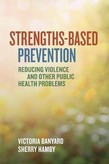
Reducing Violence and Other Public Health Problems
Provides practitioners and researchers with the means to make more impactful choices in the design and implementation of prevention programs. Drawing from state-of-the-art research on a range of behaviour problems, Victoria Banyard and Sherry Hamby present a strengths-based approach to prevention.
Vice Districts and the Birth of Chicago Organized Crime
Richard C. Lindberg reveals how Chicago politicians created and ran segregated vice districts, or levees, during the late nineteenth and early twentieth centuries, arguing that the levees' existence presaged the modern plague of global human trafficking.
Vice Districts and the Birth of Chicago Organized Crime
Richard C. Lindberg reveals how Chicago politicians created and ran segregated vice districts, or levees, during the late nineteenth and early twentieth centuries, arguing that the levees' existence presaged the modern plague of global human trafficking.
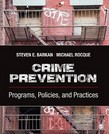
In Crime Prevention: Programs, Policies, and Practices, criminologists Steven E. Barkan and Michael Rocque present a well-rounded exploration of evidence-based policies, programs, and practices. Grounded in criminological theory and emphasizing the social, psychological, and biological roots of crime, this text presents current research, perspectives, and examples that capture the key crime prevention concepts, including the public health model for crime prevention and strategies that integrates theory and practice.
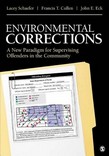
A New Paradigm for Supervising Offenders in the Community
In this book, the authors articulate an innovative approach to offender supervision that moves beyond previous debates which have focused on whether offenders under community supervision should receive rehabilitation or intensive control The growing field of environmental criminology will embrace the work of the renowned co-authors with this innovative guide for the development of new, effective strategies to more effectively integrate offenders back into the community and reduce recidivism.
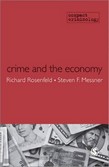
In this unique and timely book, two of the world's leading criminologists explore the connections between crime and economic conditions. The authors skilfully draw on influential criminological theories to formulate an original "institutional" perspective. This perspective sheds light on the complex ways in which levels and forms of crime reflect the structure and functioning of the economy in advanced capitalist societies. The book offers a readable, interesting and accessible analysis, addressing an array of different criminal activities, including: violent crime drug crime white-collar crime organised crime fraud corporate crime. Crime and the Economy is written with clarity and flair. Technical terms, where used, are fully explained; relevant examples punctuate the discussion; and key points are supported by graphs and diagrams. It is essential reading for undergraduates, graduate students, and academics in criminology and sociology. Compact Criminology is an exciting series that invigorates and challenges the international field of criminology. Books in the series are short, authoritative, innovative assessments of emerging issues in criminology and criminal justice - offering critical, accessible introductions to important topics. They take a global rather than a narrowly national approach. Eminently readable and first-rate in quality, each book is written by a leading specialist. Compact Criminology provides a new type of tool for teaching, learning and research, one that is flexible and light on its feet. The series addresses fundamental needs in the growing and increasingly differentiated field of criminology.
In this unique and timely book, two of the world's leading criminologists explore the connections between crime and economic conditions. The authors skilfully draw on influential criminological theories to formulate an original "institutional" perspective. This perspective sheds light on the complex ways in which levels and forms of crime reflect the structure and functioning of the economy in advanced capitalist societies. The book offers a readable, interesting and accessible analysis, addressing an array of different criminal activities, including: violent crime drug crime white-collar crime organised crime fraud corporate crime. Crime and the Economy is written with clarity and flair. Technical terms, where used, are fully explained; relevant examples punctuate the discussion; and key points are supported by graphs and diagrams. It is essential reading for undergraduates, graduate students, and academics in criminology and sociology. Compact Criminology is an exciting series that invigorates and challenges the international field of criminology. Books in the series are short, authoritative, innovative assessments of emerging issues in criminology and criminal justice - offering critical, accessible introductions to important topics. They take a global rather than a narrowly national approach. Eminently readable and first-rate in quality, each book is written by a leading specialist. Compact Criminology provides a new type of tool for teaching, learning and research, one that is flexible and light on its feet. The series addresses fundamental needs in the growing and increasingly differentiated field of criminology.
How do we reduce and prevent crime? This is a question with which governments, academics and criminal justice professionals have been grappling for decades. Crime Prevention explores the legislative developments, policy changes and practical strategies that have been put in place in recent years in an attempt to manage the level of crime in our society. The book also assesses how governments' approaches to serious crime, the war on terror, human rights and race and immigration policies have influenced ideas about community safety and crime prevention. It offers a handy glossary, along with suggestions for further reading, in order to enhance understanding of critical issues. Accessible and compelling, this book is essential reading for students of criminology, criminal justice and social policy. It is also an indispensable analytical tool for professionals working within the criminal justice arena.
How do we reduce and prevent crime? This is a question with which governments, academics and criminal justice professionals have been grappling for decades. Crime Prevention explores the legislative developments, policy changes and practical strategies that have been put in place in recent years in an attempt to manage the level of crime in our society. The book also assesses how governments' approaches to serious crime, the war on terror, human rights and race and immigration policies have influenced ideas about community safety and crime prevention. It offers a handy glossary, along with suggestions for further reading, in order to enhance understanding of critical issues. Accessible and compelling, this book is essential reading for students of criminology, criminal justice and social policy. It is also an indispensable analytical tool for professionals working within the criminal justice arena.