"Consumption and everyday life" examines the range of active, creative and critical practices involved in contemporary consumption, and reviews key contemporary issues and debates. Through cases from different parts of the world the contributors: illustrate the rich and idiosyncratic nature of local consumption practices; show the varying balance ......
This text shows how cultural products are produced, marketed and sold in an increasingly global economy, and provides an understanding of the relations between the economic and the cultural. The contributors: examine the emergence of truly global cultural products and the strategies of global cultural players; analyze how culture is circulated ......
This reassessment of the current state of cultural studies focuses on its contribution to the understanding of the media, communication and popular studies in contemporary societies. The contributers examine from a range of perspectives: the different strands of cultural studies and how they have developed; whether cultural studies is a coherent discipline; tensions and debates within and between cultural studies; alternative and related approaches to cultural studies; and "culture wars" and public controversies.
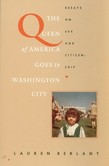
In The Queen of America Goes to Washington City, Lauren Berlant focuses on the need to revitalize public life and political agency in the United States. Delivering a devastating critique of contemporary discourses of American citizenship, she addresses the triumph of the idea of private life over that of public life borne in the right-wing agenda ......
This text uses food as a case study of consumption and the expression of taste, providing a structural analysis of changes and continuities in the representation and purchase of food. It outlines theories of change in the 20th century and considers the parallels between their diagnoses of consumer behaviour and actual trends in food practices. The book argues that various dilemmas of the modern predicament and certain imperatives of the culture of consumption make sense of food selection. It also suggests that contemporary consumption is best viewed as a process of continual selection among an unprecedented range of generally accessible terms.
If sociology is about "society" must it not also be about morality? The identification between sociology and morality was clear cut in the 19th and early 20th centuries: Marx, Durkheim, Weber, Spencer and Veblen all dealt with moral issues. However, now the connections between sociology and moral concerns have become more tenuous. In this volume, the author examines what it means to be moral in contemporary social and cultural life. He takes the step of exploring what the massacres in the Balkans and Rwanda, the Holocaust and the slaughter of Vietnamese peasants at My Lai might mean to the relatively safe and secure individuals in the West. Increasingly in the West horror is experienced only through television and cinema screens and Tester looks at the moral possibilities and implications of this, and what it means to those who are its consumers. Tester also addresses the pressing concern of whether or not this is a time of moral decay. He uses a range of literature to explore these questions and develops his account around debates raised by Arendt, Simmel, Riesman and Bauman.
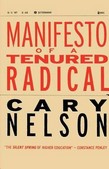
In an age when innovative scholarly work is at an all-time high, the academy itself is being rocked by structural change. Funding is plummeting. Tenure increasingly seems a prospect for only the elite few. Ph.D.'s are going begging for even adjunct work. Into this tumult steps Cary Nelson, with a no- holds-barred account of recent developments in ......
In an age when innovative scholarly work is at an all-time high, the academy itself is being rocked by structural change. Funding is plummeting. Tenure increasingly seems a prospect for only the elite few. Ph.D.'s are going begging for even adjunct work. Into this tumult steps Cary Nelson, with a no- holds-barred account of recent developments in ......