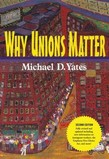
In this new edition of Why Unions Matter, Michael D. Yates shows why unions still matter. Unions mean better pay, benefits, and working conditions for their members; they force employers to treat employees with dignity and respect; and at their best, they provide a way for workers to make society both more democratic and egalitarian. Yates uses ......
trading for development in the age of global value chains
Global value chains (GVCs) powered the surge of international trade after 1990 and now account for almost half of all trade. This shift enabled an unprecedented economic convergence: poor countries grew rapidly and began to catch up with richer countries. Since the 2008 global financial crisis, however, the growth of trade has been sluggish and ......
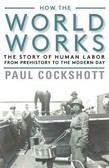
The Story of Human Labor from Prehistory to the Modern Day
A sweeping history of the full range of human labor Few authors are able to write cogently in both the scientific and the economic spheres. Even fewer possess the intellectual scope needed to address science and economics at a macro as well as a micro level. But Paul Cockshott, using the dual lenses of Marxist economics and technological ......
"An excellent summary of why and how we work." People Management magazine What do we know about the current state of work and employment and what does the future of work look like? Professor Melanie Simms provides a far-reaching overview of paid employment in the UK, examining why we work, how we work, and what the future of work will be like with changing demographics and the introduction of modern technologies. From zero-hour contracts, the gig economy and universal basic income, to automation, robotics and artificial intelligence, Simms analyses the most pressing issues facing traditional employment. Before outlining four priority areas where the UK should look to strengthen regulation of in order to face the coming challenges more effectively, but also, so that they benefit workers, as well as employers and managers. ABOUT THE SERIES: The 'What Do We Know and What Should We Do About...?' series offers readers short, up-to-date overviews of key issues often misrepresented, simplified or misunderstood in modern society and the media. Each book is written by a leading social scientist with an established reputation in the relevant subject area. The Series Editor is Professor Chris Grey, Royal Holloway, University of London
"An excellent summary of why and how we work." People Management magazine What do we know about the current state of work and employment and what does the future of work look like? Professor Melanie Simms provides a far-reaching overview of paid employment in the UK, examining why we work, how we work, and what the future of work will be like with changing demographics and the introduction of modern technologies. From zero-hour contracts, the gig economy and universal basic income, to automation, robotics and artificial intelligence, Simms analyses the most pressing issues facing traditional employment. Before outlining four priority areas where the UK should look to strengthen regulation of in order to face the coming challenges more effectively, but also, so that they benefit workers, as well as employers and managers. ABOUT THE SERIES: The 'What Do We Know and What Should We Do About...?' series offers readers short, up-to-date overviews of key issues often misrepresented, simplified or misunderstood in modern society and the media. Each book is written by a leading social scientist with an established reputation in the relevant subject area. The Series Editor is Professor Chris Grey, Royal Holloway, University of London
DIY Capitalism and the Rise of the Auto-Industrial Society
DIY check-outs, drones, self-driving cars, and e-government all are signs of the coming auto-industrial age. Will this end in mass unemployment or will new kinds of work emerge? Will 3D print production, desktop workshops and mass customization make up for lost blue-collar jobs? What will happen to health and education in the auto-industrial age? Will machines replace teachers and doctors? What might the economic and social future dominated by self-employment and a large DIY industry look like? Peter Murphy's lively, provocative book addresses these questions head-on.
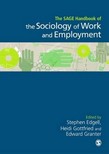
The SAGE Handbook of the Sociology of Work and Employment is a landmark collection of original contributions by leading specialists from around the world. The coverage is both comprehensive and comparative (in terms of time and space) and each 'state of the art' chapter provides a critical review of the literature combined with some thoughts on the direction of research. This authoritative text is structured around six core themes: Historical Context and Social Divisions The Experience of Work The Organization of Work Nonstandard Work and Employment Work and Life beyond Employment Globalization and the Future of Work. Globally, the contours of work and employment are changing dramatically. This handbook helps academics and practitioners make sense of the impact of these changes on individuals, groups, organizations and societies. Written in an accessible style with a helpful introduction, the retrospective and prospective nature of this volume will be an essential resource for students, teachers and policy-makers across a range of fields, from business and management, to sociology and organization studies.
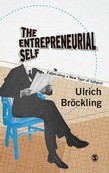
"This is a book about who we are today, and how we have become who we are. It is about the engineers of the modern soul, the entrepreneurial self. It is essential reading for all those who care about the incessant demands placed on us to become more than we are, to become entrepreneurs of our selves, to maximise and optimise our capacities in ways that align personal identity and political responsibility." - Professor Peter Miller, London School of Economics & Political Science Ulrich Broeckling claims that the imperative to act like an entrepreneur has turned ubiquitous. In Western society there is a drive to orient your thinking and behaviour on the objective of market success which dictates the private and professional spheres. Life is now ruled by competition for power, money, fitness, and youth. The self is driven to constantly improve, change and adapt to a society only capable of producing winners and losers. The Entrepreneurial Self explores the series of juxtapositions within the self, created by this call for entrepreneurship. Whereas it can expose unknown potential, it also leads to over-challenging. It may strengthen self-confidence but it also exacerbates the feeling of powerlessness. It may set free creativity but it also generates unbounded anger. Competition is driven by the promise that only the capable will reap success, but no amount of effort can remove the risk of failure. The individual has no choice but to balance out the contradiction between the hope of rising and the fear of decline. Ulrich Broeckling is Professor of Cultural Sociology at the Albert-Ludwigs-University Freiburg, Germany.
"This is a book about who we are today, and how we have become who we are. It is about the engineers of the modern soul, the entrepreneurial self. It is essential reading for all those who care about the incessant demands placed on us to become more than we are, to become entrepreneurs of our selves, to maximise and optimise our capacities in ways that align personal identity and political responsibility." - Professor Peter Miller, London School of Economics & Political Science Ulrich Broeckling claims that the imperative to act like an entrepreneur has turned ubiquitous. In Western society there is a drive to orient your thinking and behaviour on the objective of market success which dictates the private and professional spheres. Life is now ruled by competition for power, money, fitness, and youth. The self is driven to constantly improve, change and adapt to a society only capable of producing winners and losers. The Entrepreneurial Self explores the series of juxtapositions within the self, created by this call for entrepreneurship. Whereas it can expose unknown potential, it also leads to over-challenging. It may strengthen self-confidence but it also exacerbates the feeling of powerlessness. It may set free creativity but it also generates unbounded anger. Competition is driven by the promise that only the capable will reap success, but no amount of effort can remove the risk of failure. The individual has no choice but to balance out the contradiction between the hope of rising and the fear of decline. Ulrich Broeckling is Professor of Cultural Sociology at the Albert-Ludwigs-University Freiburg, Germany.