Psychoanalytic and Anthropological Investigations in Amae
Western ideologies traditionally emphasize the concepts of individualism, privacy, freedom, and independence, while the prevailing ethos relegates dependency to a disparaged status. In Japanese society, the divergence from these western ideals can be found in the concept of amae (perhaps best translated as indulgent dependency) which is part of ......
This is a collection of essays by leading scholars in political science, geography, urban studies and planning. The contributors take a postmodern, critical approach to representations of the city and space, spatial practices and analysis. Chapters address such issues as the history and strategy of planning, walled cities and modern development, theories of capitalist development and modes of production, and urban planning.
In present-day societies, knowledge is not only the key to the world, but the making of the world. In this broad-ranging analysis of the central role that knowledge plays in our life Nico Stehr critically examines the premises of existing social theory and explores the knowledge relations in advanced societies. The result is a significant new synthesis of social theory. The issues addressed in "Knowledge Societies" include: the process of scientization - the penetration of scientific knowledge not only into production but into most spheres of social action; the transformation of the political system by increasingly knowledgeable citizens; the rise of specific areas of expertise and changes in corresponding institutions based on the deployment of specialised knowledge; a shift in the nature of societal conflict from struggles about the allocation of income and property to claims and conflict about generalized human needs; the emergence of fragility as a basic attribute of modern social organizations. The author does not argue that the transformations of contemporary societies around knowledge lead to any unilinear pattern of change, or to universal shifts to the advantage of specific social groups. But his argument amply demonstrates that all social theories now need to take account of the changing nature of social relations around knowledge, and defines the parameters within which this analysis should take place. This book will be essential reading for all those interested in social theory, sociology of knowledge and science, and the whole issue of knowledge in the late twentieth century,
This anthology aims to offer incisive analysis of the plethora of issues raised by advances in reproductive medicine, including abortion, contraception, cryopreservation of gametes and embryos, surrogate motherhood and psychosocial issues of in-vitro fertilisation.
Is Japan really different? Has America's sun set? How have conflicting views on the role of government affected US-Japan relations? What are the real differences in American and Japanese industrial policies? What is the anatomy of US-Japanese antagonisms? What is Japan's future course? This book deals with these questions.
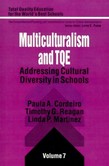
The authors of this book confront barriers of discrimination that must be overcome to ensure an equitable education for all students. Specific activities and approaches are included to broaden awareness, understanding and communication. The volume provides practical examples that can be used to incorporate the philosophy of TQE with multicultural teaching in positive and supporting ways.
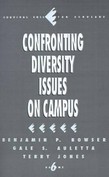
The authors of this volume discuss diversity issues such as admission policies and the role of ethnic studies departments, then suggest strategies for dealing with questions of racism, diversity and intercultural communication. Suggestions range from ways to improve intercultural interpersonal skills through to the broad structural changes needed if a university is to embrace its diverse population.
This volume explores the impact of social, cultural, structural, network and dynamic transactional processes on the conduct of relationships. In so doing, it makes a compelling case for research to be directed away from over-application of individual perspectives and towards inclusion of contextual factors. Confronting the practical realities against which individuals may struggle to manage relationships, contributors focus on such issues as: limits on opportunity and freedom; coercive family norms; responsibilities; poverty; and prejudice.
This volume explores the impact of social, cultural, structural, network and dynamic transactional processes on the conduct of relationships. In so doing, it makes a compelling case for research to be directed away from over-application of individual perspectives and towards inclusion of contextual factors. Confronting the practical realities against which individuals may struggle to manage relationships, contributors focus on such issues as: limits on opportunity and freedom; coercive family norms; responsibilities; poverty; and prejudice.