This volume details the self-reported stress of being Black in the United States, and documents the cultural resources African Americans draw upon to overcome adversity and maintain a positive, healthy perspective on life. Based on data obtained from a United States National Survey of Black Americans, the book first discusses psychological and sociological factors affecting life satisfaction. Contributors then explore how these psychosocial factors contribute to such health problems as alcoholism and hypertension. The volume concludes with an examination of strategies Black Americans use in their attempt to solve life problems. These include: prayer; avoidance; active problem-solving; and seeking help from family, community mental health providers and law enforcement agencies.
Should African Americans be defined as a race or as an ethnic (cultural) group? If the latter, what role does culture play in their lives and how can it be measured? This groundbreaking book argues that African Americans should be classed as a cultural group, and presents a unique scale for measuring the group's acculturation - the degree of assimilation into the dominant culture. The volume features empirical studies exploring the role of culture and acculturation in African-American behaviour, health and psychology.
Written in a bold, inventive style, Xodus aims at a new, positive "reconstruction" of African American maleness in light of the black womanist movement, the men's movement, the recent vision of Malcolm X and Martin Luther King, Jr., and the theological sensibilities of Howard Thurman.
Collects the speeches, pamphlets, and articles that trace the development of black nationalism in the 20th century. This title provides a showcase of the work of more than fifty prominent thinkers including Louis Farrakhan, Elijah Muhammad, Maulana Karenga, the founder of Kwanzaa, Amiri Baraka and Molefi Asante.
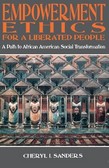
Cheryl Sanders here sharpens the agenda of black liberation by offering both a fresh reading of historical black religion and a distinctive approach to Christian ethics. Arguing that the experience of oppression has been the catalyst for black moral life and thought, Sanders traces several paths or approaches that African American Christians have ......
Robert Parris Moses and Civil Rights in Mississippi
Next to Martin Luther King, Jr and Malcolm X, Bob Moses was arguably one of the most influential and respected leaders of the civil rights movement. This book chronicles both Moses' political activity and his intellectual development, revealing the strong influence of French philosopher Albert Camus on his life and work.
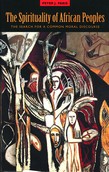
Eminent black social ethicist Peter Paris focuses on African "spirituality"--the religious and moral values pervading traditional African religious worldviews. Paris's careful scholarship and his eye for value in varying cultural milieus combine to model comparative cultural analysis and to clarify cultural foundations of black ethical life.
Falasha in Ethiopia: From Earliest Times to the Twentieth Century
The origin, condition and future of the Black Jews of Ethiopia has been a source of debate. This study of the history of this community aims to demythologise the history of the Falasha and to consider them in the wider context of Ethiopian history and culture.
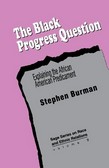
The recent Los Angeles race riots exposed the depth and persistence of the race problem in the United States and symbolized the despair and hopelessness felt in North America's cities. The key question remains: Are African-Americans making any progress towards integration into mainstream society? The Black Progress Question examines the popular responses to this issue and finds them insufficient. For too long, the analysis of black progress has been met with an unwarrented optimism. Stephen Burman presents an alternative approach, sobering in its realism, which will dispel beliefs that a solution to this problem is close at hand.