Drawing on research and case studies from around the world, Bicycle City offers a compelling case of a car-free urban future by harnessing the post-pandemic bike boom-perfect for professionals and advocates
It took an oil crisis in the 1970s for the Dutch to realize that they simply ......
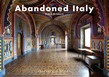
An exceptional photographic report of Abandoned Italy. Robin Brinaert has been travelling around Italy for over eight years in search of these abandoned, forbidden places. He highlights the sometimes dramatic fate of our heritage - a serious reflection on safeguarding.
A critical introduction to power, cities and urbanism in the 21st century
What is Urban Theory? How can it be used to understand our urban experiences? Experiences typically defined by enormous inequalities, not just between cities but within cities, in an increasingly interconnected and globalised world. This book explains: Relations between urban theory and modernity in key ideas of the Chicago School, spatial analysis, humanistic urban geography, and 'radical' approaches like Marxism Cities and the transition to informational economies, globalization, urban growth machine and urban regime theory, the city as an "actor" Spatial expressions of inequality and key ideas like segregation, ghettoization, suburbanization, gentrification Socio-cultural spatial expressions of difference and key concepts like gender, sexuality, race, ethnicity and "culturalist" perspectives on identity, lifestyle, subculture How cities should be understood as intersections of horizontal and vertical - of coinciding resources, positions, locations, influencing how we make and understand urban experiences. Critical, interdisciplinary and pedagogically informed - with opening summaries, boxes, questions for discussion and guided further reading - Urban Theory: A Critical Introduction to Power, Cities and Urbanism in the 21st Century provides the tools for any student of the city to understand, even to change, our own urban experiences.
Londoners Making London tells the story of nine projects that have re-defined local community-driven urban regeneration. Countering the expectation that the development of cities is controlled only by powerful developers, this book demonstrates that transformational change is increasingly driven not by architects or planners, but by individuals ......
The economic and political situation of cities has shifted in recent years in light of rapid growth amidst infrastructure decline, the suburbanization of poverty and inner city revitalization. At the same time, the way that data are used to understand urban systems has changed dramatically. Urban Analytics offers a field-defining look at the challenges and opportunities of using new and emerging data to study contemporary and future cities through methods including GIS, Remote Sensing, Big Data and Geodemographics. Written in an accessible style and packed with illustrations and interviews from key urban analysts, this is a groundbreaking new textbook for students of urban planning, urban design, geography, and the information sciences.
Explores the unintended consequences of civic activism in a disaster-prone city After Hurricane Katrina, thousands of people swiftly mobilized to rebuild their neighborhoods, often assisted by government organizations, nonprofits, and other major institutions. In Rethinking Community Resilience, Min Hee Go shows that these recovery efforts are ......
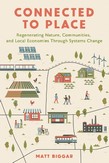
Regenerating Nature, Communities, and Local Economies Through Systems Change
Connected to Place looks at place-based systems change as a real-world solution to our growing environmental and social crises. Distilling lessons from a thirty-year career in the social sector, Matt Biggar offers a practical guide to creating conditions for societal transformation. He presents a vision that addresses the root of our plight by ......
How debt and speculation financed the suburban American dream and led to today's inequalities In the popular imagination, the suburbs are synonymous with the "American Dream" of upward mobility and economic security. After World War II, white families rushed into newly built suburbs, where they accumulated wealth through homeownership and enjoyed ......