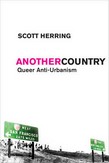
Asking us to look beyond the cities on the coasts, this title draws a different map, tracking how rural queers have responded to this myopic mindset. Interweaving a wide range of disciplines - art, media, literature, performance, and fashion studies - it develops a critique of how metronormativity saturates LGBTQ politics, artwork, and criticism.
Asking us to look beyond the cities on the coasts, this title draws a different map, tracking how rural queers have responded to this myopic mindset. Interweaving a wide range of disciplines - art, media, literature, performance, and fashion studies - it develops a critique of how metronormativity saturates LGBTQ politics, artwork, and criticism.
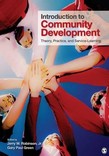
Introduction to Community Development provides students of community and economic development with a theoretical and practical introduction to the field of community development. Bringing together leading scholars in the field of community development, the book follows the curriculum needs in offering a progression from theory to practice, beginning with a theoretical overview, an historical overview, and the various approaches to community development.
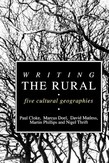
This book arises out of an ESRC project devoted to an examination of the economic, social and cultural impacts of the 'service class' on rural areas. The research was an attempt to document these impacts through close empirical work in a set of three rural communities, but something happened on the way. The authors found that the 'rural' became a real sticking point. Respondents used it in different ways - as a bludgeon, as a badge, as a barometer - to signify many different things - security, identity, community, domesticity, gender, sexuality, ethnicity - nearly always by drawing on many different sources - the media, the landscape, friends and kin, animals. It became abundantly clear that the 'rural', whatever chameleon form it took, was a prime and deeply felt determinant of the actions of many respondents. Yet it was also clear that to the authors they possessed no theoretical framework that could allow them to negotiate the 'rural' to deconstruct its diverse nature as a category. Rather each of the extended essays in the book is an attempt by each author to draw out one aspect of the 'rural' by drawing on different traditions in social and cultural theory.
`Malcolm Moseley makes an impressive job of "cutting through the cackle" and has produced a definitive catch-all volume to inform students, practitioners, community activists and local decision makers alike.... The book is transparently and logically laid out.... From a personal perspective as community activist and local authority member, I ......
How can we partner with our communities to improve school programs and increase students' success? This current era of high stakes testing, accountability, and shrinking educational budgets demands that schools seek bold and innovative ways to build strong learning environments for all students. Community involvement is a powerful tool in generating resources that are essential for educational excellence. Building School-Community Partnerships: Collaboration for Student Success emphasizes the importance of community involvement for effective school functioning, student support and well-being, and community health and development. This sharp, insightful book serves as an excellent resource for educators seeking to establish school-community partnerships to achieve goals for their schools and the students, families, and communities they serve. Schools can collaborate with a wide variety of community partners to obtain the resources they need to achieve important goals for students' learning. Some of these partners may include: Businesses and corporations Universities and other institutions of higher learning National and local volunteer organizations Social service agencies and health partners Faith-based organizations and institutions Work successfully with community partners to improve school programs and curricula, strengthen families, and expand your students' learning experiences!
`Malcolm Moseley makes an impressive job of "cutting through the cackle" and has produced a definitive catch-all volume to inform students, practitioners, community activists and local decision makers alike.... The book is transparently and logically laid out.... From a personal perspective as community activist and local authority member, I ......