Examines the life and writings of Roman Catholic Church reformer Ivan Illich (1926-2002) in the context of the wider field of cultural criticism that took shape in the 1960s and beyond.
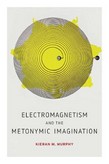
Illustrates how the discovery of electromagnetism in 1820 not only led to technological inventions, such as the dynamo and the telegraph, but also legitimized modes of reasoning that manifested a sharper ability to perceive how metonymic relations could reveal the order of things.
Regulating the Covert World of Technological Policing
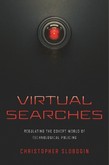
Choice Outstanding Academic Title 2023 A close look at innovations in policing and the law that should govern them A host of technologies-among them digital cameras, drones, facial recognition devices, night-vision binoculars, automated license plate readers, GPS, geofencing, DNA matching, datamining, and artificial intelligence-have enabled ......
Discussion and case studies of ethical best practices for forensic anthropologyForensic anthropology involves the sensitive work of recovering and analyzing human remains. Its practitioners are often confronted with ethical challenges, but training in this area is limited and best practices are not fully developed across the discipline. The first ......
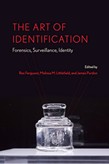
Since the mid-nineteenth century, there has been a notable acceleration in the development of the techniques used to confirm identity. From fingerprints to photographs to DNA, we have been rapidly amassing novel means of identification, even as personal, individual identity remains a complex chimera. The Art of Identification examines how such ......
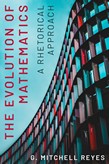
Applies contemporary rhetorical analysis to mathematical discourse, calling into question the commonly held view that math equals truth. Explores how mathematical innovation has historically relied on rhetorical practices of making meaning, such as analogy, metaphor, and invention.
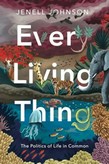
Explores the question of what is life, and how invocations of life itself can join and divide, horrify and amaze, and may have the potential to inspire a future politics in a world beset by crises.
A collection of essays which deploy rhetorical lenses to explore how mathematics influences the values and beliefs with which we assess the world and make decisions, as well as how our values and beliefs influence the kinds of mathematical instruments we construct and accept.